
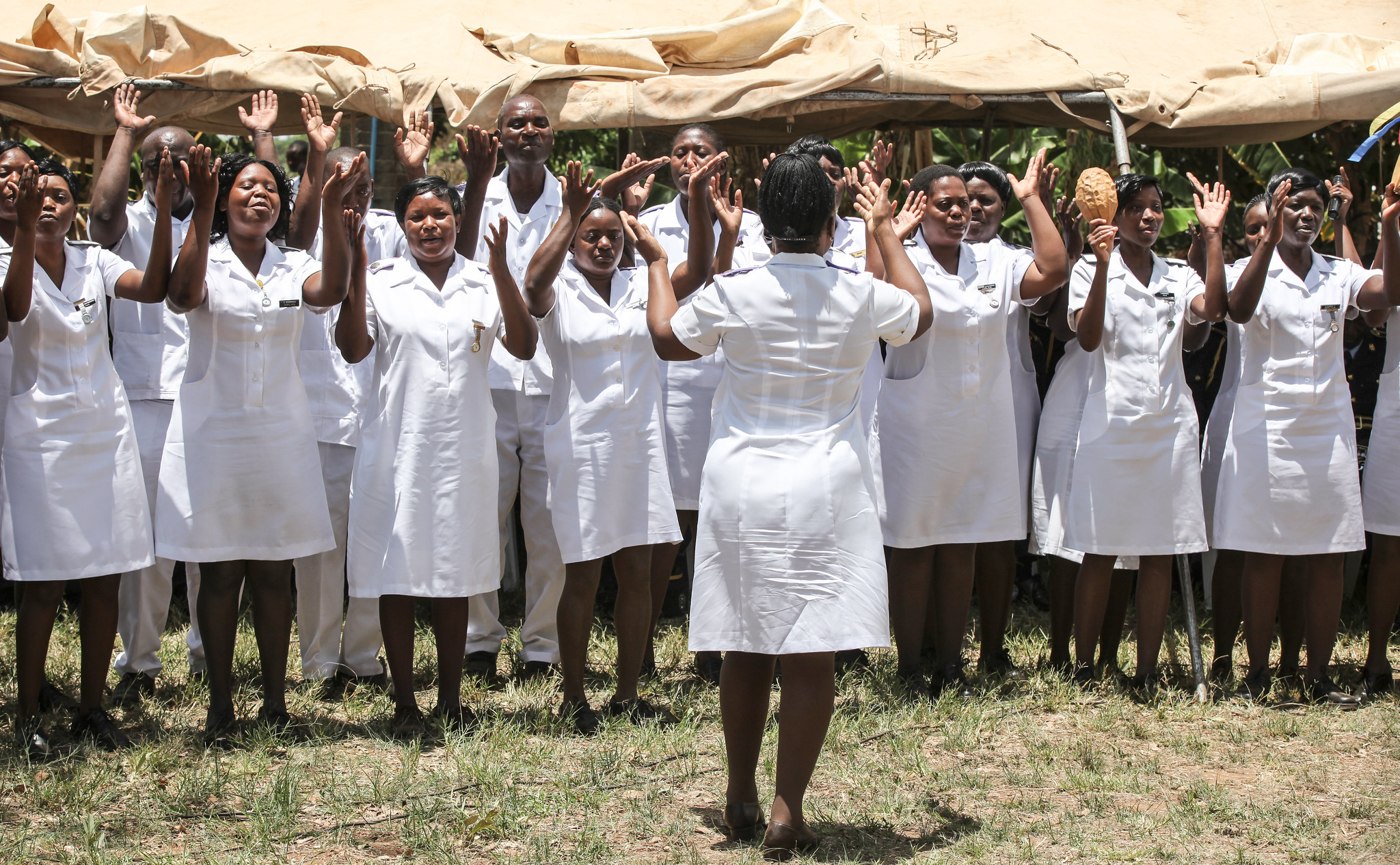
About 7,000 professionals, especially nurses, have been leaving Zimbabwe in favour of English-speaking countries outside Africa. This phenomenon is crippling basic healthcare services.
The shortage is due to an exodus of professionals seeking better pay: while a Zimbabwean nurse earns around $250 (€215) per month, those in, for example, the UK can make up to GBP 3,150 (€3,590, $4,150) monthly, according to the NHS.
“There is a lot of burnout. Some clinics have one or two nurses serving a catchment area of 8,000,” Enock Dongo, president of the Zimbabwe Nurses Association, told DW News. He says that “the nurse-patient ratio should be one to five or seven, it has risen to one to 20.”
More Zimbabwean Nurses Now Abroad than in the Country
The Zimbabwean Health Ministry says the national healthcare system is missing at least 14,000 healthcare workers who leave for other countries in hope of better pay.
The UK is the top destination, with over 3,600 Zimbabwean nurses working there. Australia and Ireland are also popular, accounting for about 650 nurses in each. The US has seen an uptake recently, with more than 400 Zimbabweans now working there.
About 1,700 nurses have moved to other African states, like Namibia, Botswana, and Eswatini. South Africa used to be the top African destination, but rising anti-migrant rhetoric has been driving many migrant workers out of the country.
Statistics don’t include people who work as nurses but acquired rights to work via another visa route that is not officially certified for nurses. There are also many who move away to study and never return home to work.
Internal information from an online nurses’ forum shared with DW revealed about 9,100 nurses remain in the country.
Sufficient System but Not Enough to Maintain It
The World Health Organization’s (WHO) 2024 report highlighted that the Medicines Control Authority of Zimbabwe (MCAZ) reached Maturity Level 3 under the WHO Global Benchmarking Tool. This means that the WHO recognises Zimbabwe has “a stable, well-functioning, and integrated regulatory system that ensures the safety, quality, and efficiency of medicines and vaccines.” Only six African nations have received this recognition.
However, the WHO also put Zimbabwe on their Health Workforce and Safeguards List in 2023. Known as the red list, which monitors whether there are enough personnel to maintain a healthcare system efficiently. It included conflict-ridden countries in major humanitarian crises, such as Somalia, Sudan, and Afghanistan.
The annual report from 2024 set the goal to double the workforce capacity to achieve upper middle-income status on the Universal Health Coverage Index by 2030. With the next Health Workforce and Safeguards List releasing in 2026, progress made is yet to be seen.
Despite its listing, which has caused countries like the UK to seize active recruitment from Zimbabwe, nurses continue to leave.
Strict Measures of a Desperate System
The government has taken steps to keep its professionals: nurses are bonded to work in the country for 20 years before they can be released to work abroad, despite sharp criticism from unions.
There have also been reports the government is withholding verification letters required by thousands of doctors and nurses, as they are a necessity for working abroad. They are also expensive, going for $300 in fees.
Despite the hardships, many would be willing to return home if conditions improved. “The idea isn’t to stay permanently abroad,” one professional explained. “The idea is to learn, grow and take it back home.”
The government is already preparing a National Health Insurance Bill to expand healthcare access and improve financing.
“We will build a resilient, equitable and high-performing health system where quality care is a right, not a privilege,” Health Minister Douglas Mombeshora told DW.
