
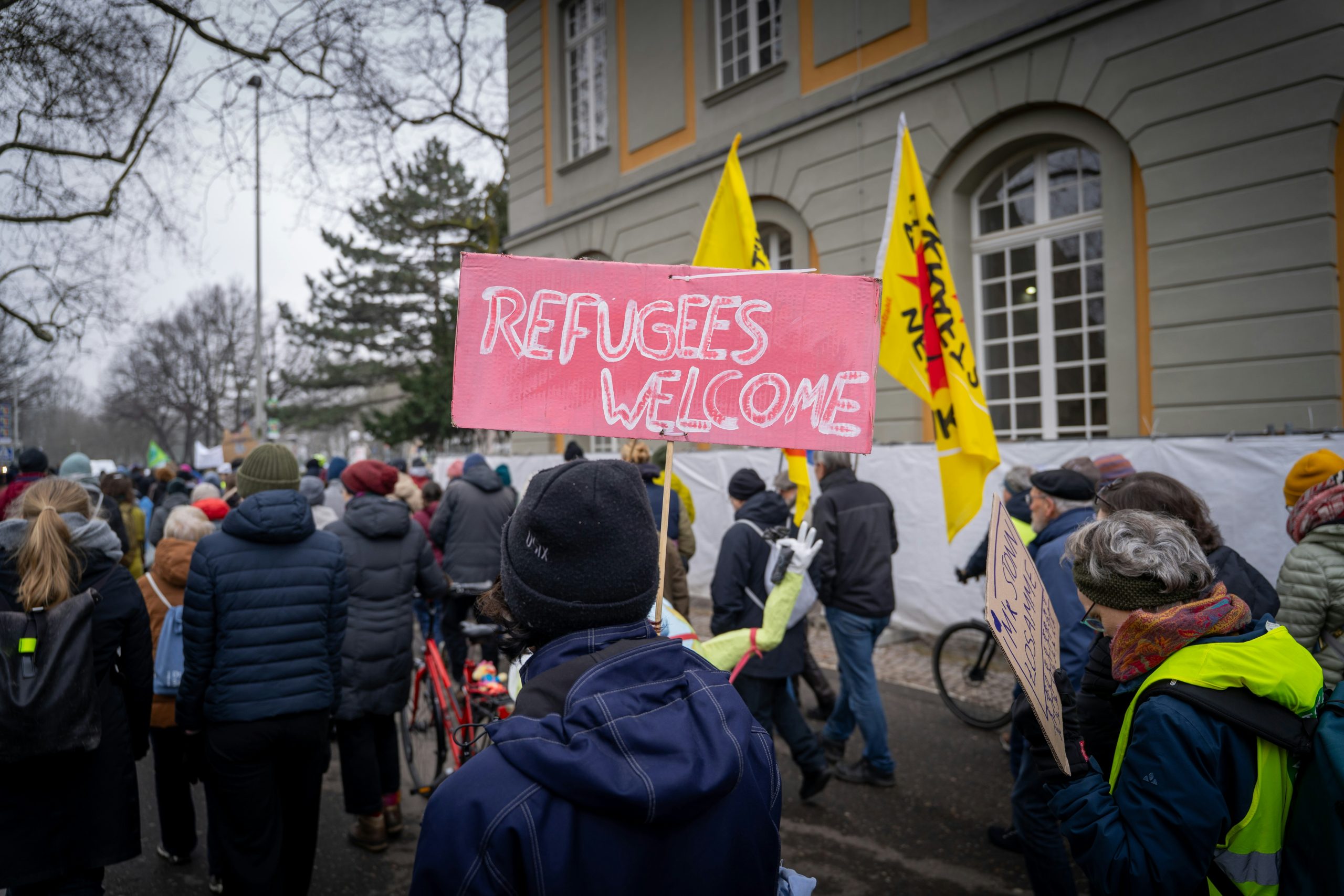
People have consistently migrated from one location to another. Some individuals relocate in pursuit of improved employment opportunities, enroll in higher education, or provide assistance to their families.
Others are seeking to escape perilous circumstances such as war, injustice, or issues arising from climate change, colonialism, and the global inequalities it has engendered.
Nevertheless, instead of enjoying unrestricted movement like their European counterparts, they frequently encounter substantial obstacles such as protracted and intricate visa procedures or the necessity of undertaking perilous journeys.
Even after reaching a new country, the challenges do not immediately become simpler.
The type of assistance individuals receive—and the ease or difficulty of establishing a new life—depends on numerous factors, such as their legal status (whether they are legally permitted to remain), educational background, and the availability of financial resources and support.
Acquiring language skills, comprehending the norms and systems, securing employment, attending educational institutions, and obtaining healthcare or housing — these are all significant milestones. And the degree to which an individual can successfully settle in is not solely determined by their own efforts; it is also influenced by the receptiveness of the local community.
Experts Develop Tools for Better Integration of Migrants
Local communities are frequently oblivious of the difficulties encountered by migrants.
Researchers from the Leibniz Institute of Regional Geography (IfL), in collaboration with municipalities, civil society organizations, and employers, previously participated in an initiative known as Arrival Regions. We have devised a toolkit to assist communities in becoming more welcoming and inclusive toward newcomers.
The toolbox encompasses elements such as language acquisition, legal assistance, empowerment initiatives, and intergenerational learning.
During the initiative, we identified that one of the most significant challenges individuals encounter is securing suitable employment.
In collaboration with partners from Slovenia, Italy, and Poland, they devised a new initiative titled MILEstone: Migrants’ Integration into Local Economies.
The objective of the project is to assist non-EU migrants and refugees in securing suitable, stable employment that aligns appropriately with their skills—thereby preventing them from accepting low-paid positions that do not correspond to their qualifications.
The MILEstone initiative has established a platform for the exchange of experiences among eleven countries: Germany, Sweden, Finland, the Netherlands, Poland, Spain, Italy, Greece, Slovenia, Ukraine, and Moldova.
The researchers visited one another to familiarize themselves with local structures, discuss challenges, and share best practices—projects that they found valuable and of interest to other regions as well. Below is a summary of the key insights derived from these visits, along with several best practices from various project partner regions.
What Helps?
Many migrants struggle to find jobs that match their abilities and expertise. A doctor or engineer from their home country may have to work low-paying employment because their qualifications aren’t recognised, they don’t speak the language well, or they obtain bad job advice.
Real-job-focused language classes and transparent mentoring and career guidance are also fundamental.
Other tools include easy recognition of foreign qualifications and skills, employer support for migrant workers and recognition of informal skills through programs like MYSKILLS (Germany) and Juttuklubi (Jyväskylä, Finland).
Language Learning is Essential
Making friends, getting a job, feeling like you belong, and having a say require knowing the local language. But official language classes are often too generic and ignore pupils’ different backgrounds (education, literacy, trauma, learning pace). Rural communities struggle with long waiting lists of a few months to 1.5 years. Some drop out to work to sustain themselves and their families, but also because authorities encourage them to work.
Good examples:
• Sweden’s Swedish For Immigrants (SFI) provides three language learning paths.
• The Swedish student network BILDA offers culturally sensitive, flexible learning across several areas.
• German corporations like Henglein give language classes at work. • Jyväskylä, Finland uses “plain language” in counselling administrative procedures and offers translations for greater accessibility.
• Multilingual peer workers with migration backgrounds assist in removing barriers.
Housing, Healthcare, and Transport
Without a safe house, good health care, and transportation, life is hard. Migrants often face housing market discrimination, lack of interpretation and translation at the doctor, and a lack of cash to buy a car if public transport is unavailable.
Working methods:
• Administration health coordinators assist with system explanation and doctor referrals, as in Linköping, Sweden
• Flexible transport for remote areas
• Assisted in obtaining safe, inexpensive housing through administrative coordinators in Jyväskylä, Finland and Burgenlandkreis, Germany.
Not speaking administrative language makes public services difficult to grasp.
Even native speakers struggle with bureaucratic terminology. Lack of international mediation, translation, and interpretation makes such structures unavailable. Migrants and field workers also struggle to provide effective services due to red tape and shifting legislation. Thus, migrants rarely have a vote in life-changing decisions. They also lack knowledge of their rights and enforcement.
Integration of Migrants: Focusing on the Person
Migrant inclusion isn’t just about fixing one problem — it’s about looking at the whole picture: psychological needs, language, health, education, jobs, participation, protection from discrimination and more. Each person’s journey is different, so our solutions need to be flexible and based on real-life experiences.
The main message of the MILEstone project is that: migration isn’t a problem to be solved—it’s a fact of life. It can help people survive war or the climate crisis, and it can make societies stronger as a whole. But to make that happen, we need to stop seeing migrants as “outsiders” and start seeing them as neighbors, classmates, co-workers, and future leaders. We all carry the responsibility for creating inclusive societies. The MILEstone Project reminds us that with the right support, everyone can belong—and that makes all of us stronger.
