
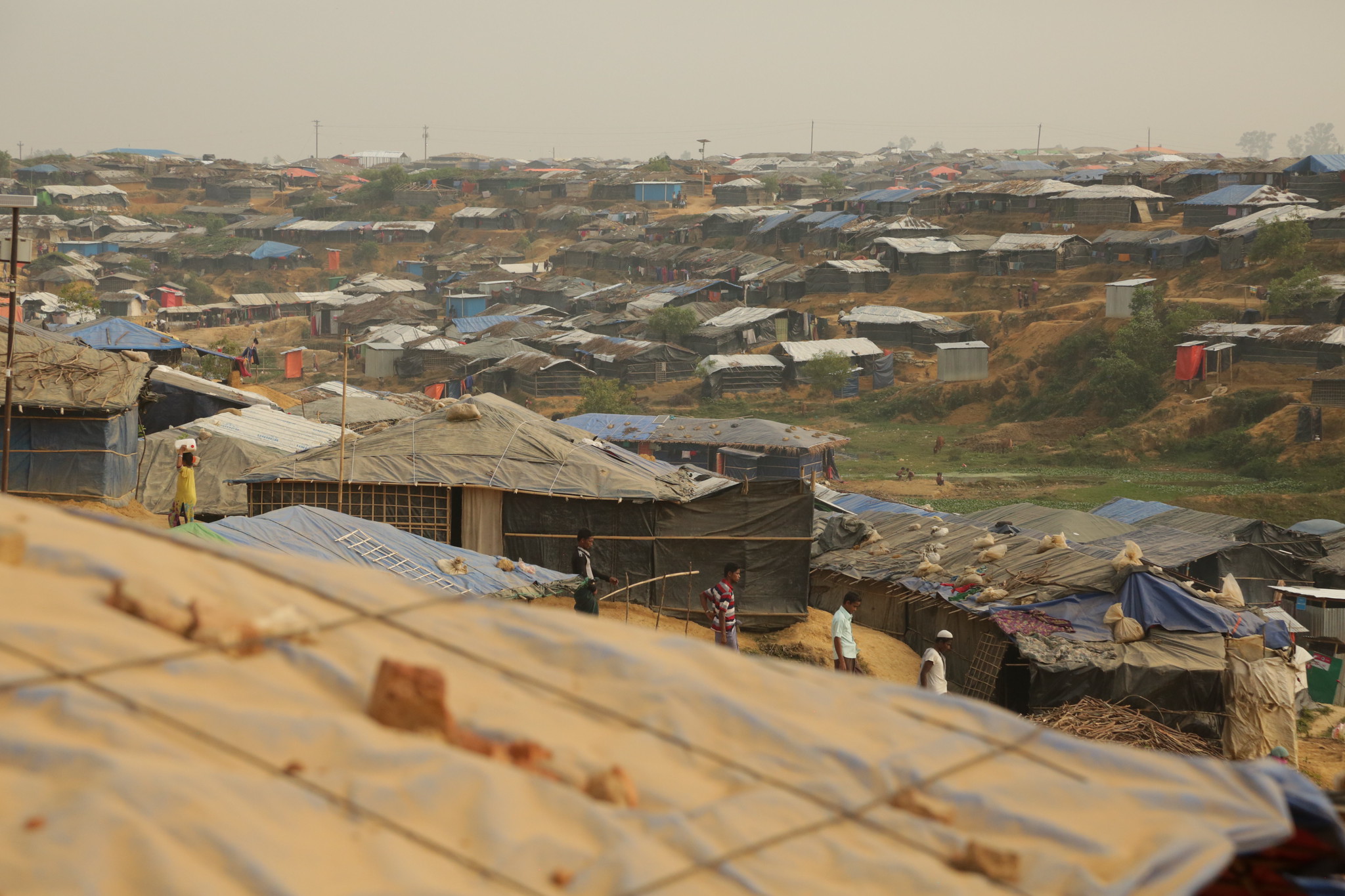
Authorities have officially relocated the overcrowded Rohingya refugee camp after landslides caused by the monsoon killed at least 13 refugees, including five children. On Sunday, Channel Central Asia reported the death toll to have risen to 50 nationwide, with about 35,000 people in total being forced to seek shelter in government-run centers.
Cox’s Bazar: Shelters and a School Collapse
Cox’s Bazar, located on the far-southern shore of Bangladesh, near the Myanmar border, is home to over 1 million Rohingya refugees, living in makeshift shelters having fled a military crackdown in Myanmar.
Begum Jahan, who teaches the Quran at the Islamic school in the camp, told The Independent that the local girls were preparing for lessons when the school building partially collapsed.
“Those of us who were on the western side managed to get out, but everyone on the eastern side was buried under the debris,” he recalled.
On 8th July, at least five children and a teacher died in this collapse. Overall, landslides caused by the heavy monsoon floods killed 13 refugees before community leaders and a group of volunteers began rounding up locals to move them to a safer location.
Cox’s Bazar authorities said refugees living near at-risk hilly areas were to be relocated; more than 1,000 people had already been transported before last week’s evacuation. Many refugees refuse to leave their hard-earned makeshift homes despite warnings.
Over 1.2 million refugees live on hillsides cleared of trees, which remain highly unstable as the monsoon continues. Sarder Udoy Raihan of the Flood Forecasting and Warning Centre told the AFP on 12th July that while the situation in the Southeast is expected to improve, “the monsoon remains active over the northeastern and northern parts of Bangladesh, and there is a possibility of further inundation.”
Monsoon-Induced Floods Grip Asia
In Bangladesh, the Chattogram district is worst affected, with 50 people having died in the past week, including 29 who were buried by landslides, according to AFP’s phone call with divisional commissioner Mohammed Ziauddin. “Two individuals are still missing,” he added.
Authorities opened 4,000 shelters for the 35,000 displaced residents as food and drinking water shortages deepen the crisis.
In India’s western Maharashtra state, officials reported at least 13 people dying in rain-related incidents last week, while in Kerala state, five people were still missing after a landslide. In the Wayanad district, a hilly region, at least three workers were killed near a tunnel construction site when a hill collapsed on them. Seven were injured in the same incident, according to Sky News.
Severe floods also affected the Himalayan regions of Jammu, Kashmir, and Himachal Pradesh, as well as South China, where at least 6 died and 375,000 were affected by flash floods. The numbers are expected to rise as Super Typhoon Bavi has touched down this weekend, prompting the evacuation of almost 2 million people.
Continued Struggle
For the Rohingya, this is the continuation of decades of struggle. The army crackdown in Myanmar in 2017 pushed over 700,000 to flee their home country and settle near Cox’s Bazar.
In January, a fire destroyed hundreds of makeshift homes, displacing over 2,000 people. Now, the landslides wreak destruction on the community once again.
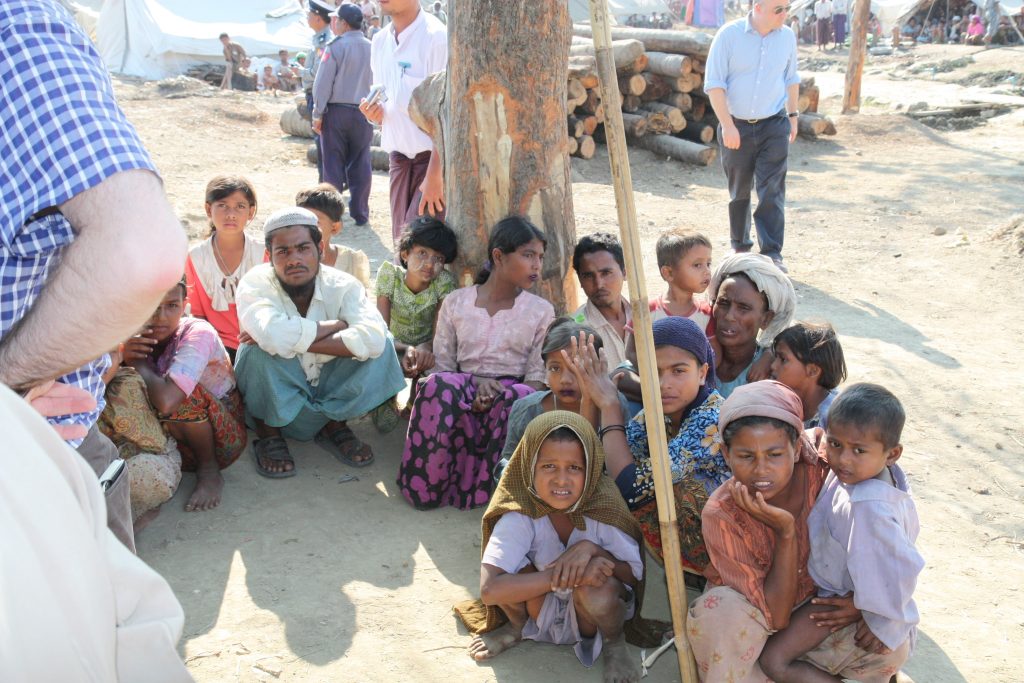
Bangladesh has urged the international community for many years to aid repatriation efforts, but the process remains stalled. Meanwhile, humanitarians continue to raise concerns regarding Myanmar’s northern Rakhine State, where many Rohingya communities would be repatriated to, citing reports of forced labor, food and health crises, as well as escalating armed conflicts as warnings that premature decisions will endanger the refugees.
