
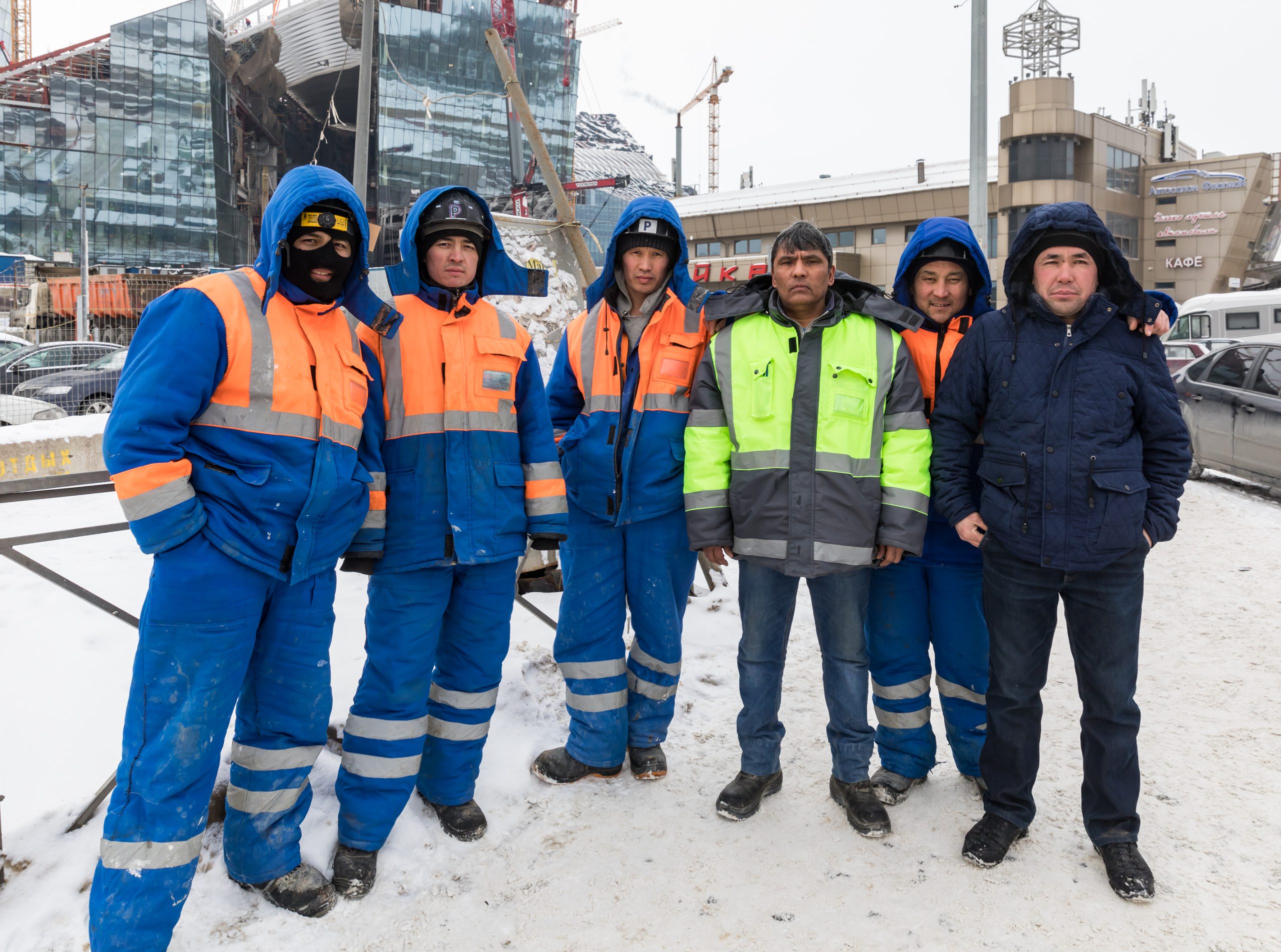
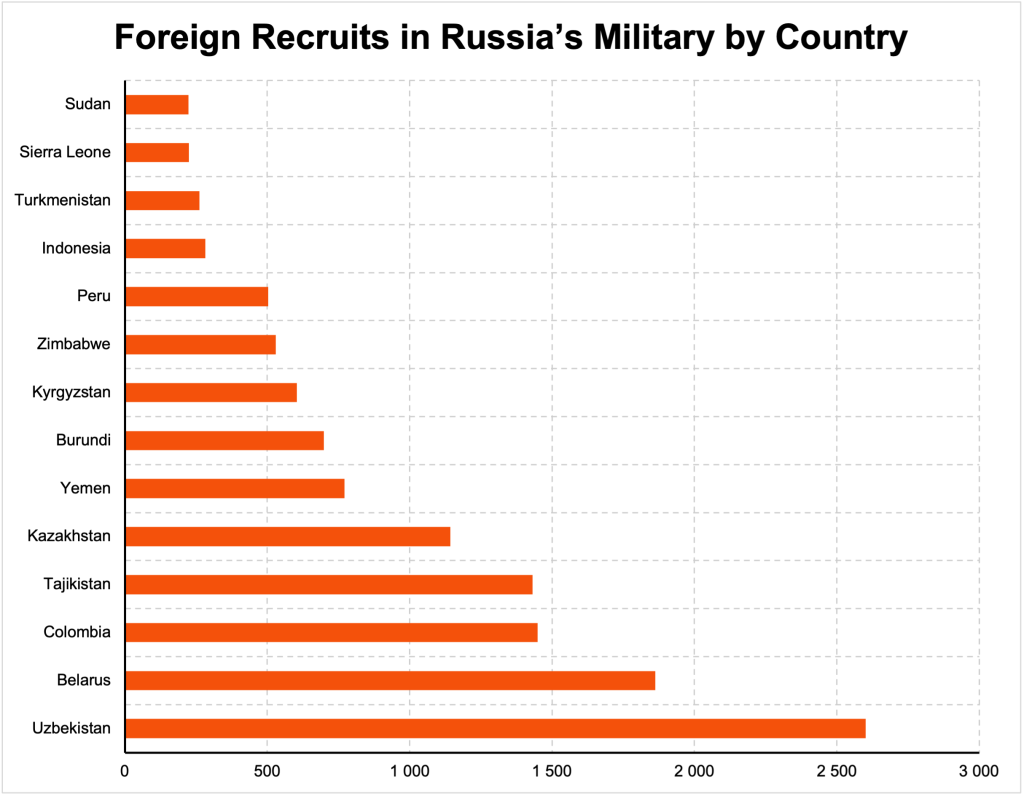
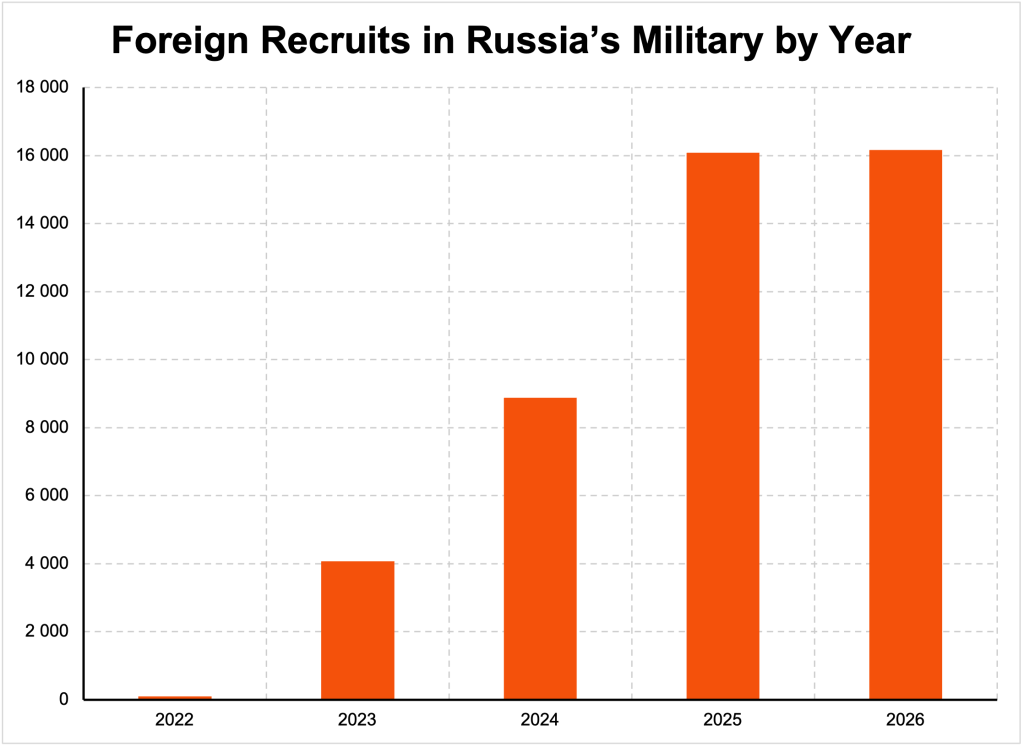
According to Ukrainian official estimates, hundreds of people from Central Asia and Belarus joined Russia’s military during the first nine months of 2026. However, recruitment goes far beyond the former Soviet Union, with foreign citizens from South America, Africa, the Middle East, and East Asia all joining Moscow’s ranks. Recently, 12,596 foreign recruits joined the Russian forces.
As Radio Liberty documented in a recent interview with a Bangladeshi national, Hossain, he was promised a construction job in Russia but was instead transported to the front together with 30 other fellow countrymen.
Other families and individuals in Bangladesh questioned by RFE/RL stated that they were first recruited for civilian work but were later transferred to conflict zones.
According to Hossain, at least 20 Bangladeshis were slain “right before my eyes” in a drone strike. Hossain is one of the rare people who survived severe leg injuries and made it home safely.
At Least 30,000 Foreign Recruitments Since 2022
A UN report released last month accused Russia of recruiting foreign people from at least 29 countries using “deception” and committing “trafficking” and other human rights crimes.
A previous investigation indicated that at least 27,000 foreign nationals from more than 130 nations have been recruited since the full-scale invasion began in February 2022.
This is an intentional, institutionalized technique, not a marginal or spontaneous phenomenon.
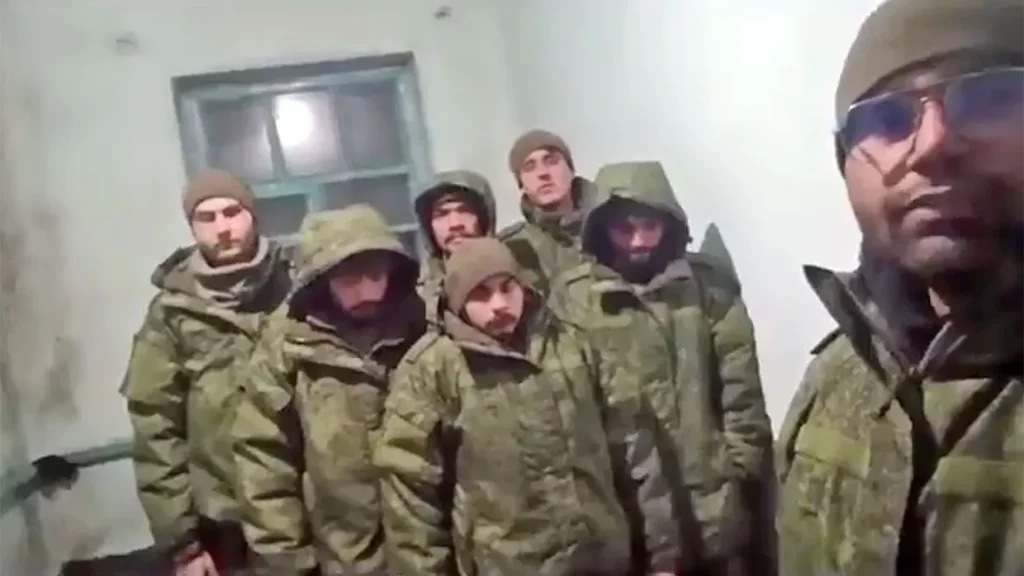
As of April 2026, Ukraine had captured recruits from Colombia to Cameroon, Italy to China. The data were prepared by Ukraine’s Coordination Headquarters for the Treatment of POWs and cover the period from the invasion to late 2025.
In March, Fortify Rights and Truth Hounds conducted a combined investigation and discovered that at least 104 Bangladeshis were recruited into the Russian military, with at least 34 dead.
Anatomy of Foreign Recruitment
Russia’s legal system is geared to entice foreigners to join its military in exchange for quicker citizenship and substantial monetary benefits. Since 2022, the Kremlin has frequently reduced citizenship restrictions for foreign military recruitment, eliminating language knowledge, residency, combat service, and other qualifying requirements while reducing application processing timeframes.
In November 2025, Russia added a “stick” to the “carrot”: Decree No. 821 made the most common paths to permanent residence and citizenship for certain foreign men conditional on a military or emergency-service contract, a discharge record, or a certificate of unfitness, while keeping the fast track open for those who sign up.
Legislation enacted in 2026 also enhanced protections against extradition for present and former foreign military members.
Foreign recruitment is often conducted using social media platforms such as Facebook, WhatsApp, TikTok, and even in-game chat rooms. Frequently, such adverts offer civilian professions with great compensation, and individuals may be unaware that they are joining the Russian Armed Forces.
It Began With a Simple Job Offer
The methods used to transport and process people vary by region: in Cuba, recruiters immediately purchase plane tickets to Russia for recruits because citizens do not require a Russian visa; in Nepal, candidates must pay for their own flights, borrowing money from family or even private lenders and entering into debt bondage before arriving in Russia.
In Kenya, Ghana, and Nigeria, the procedure is carried out through networks of private brokers and numerous job firms, which have transformed recruiting into a highly profitable business.
These financial intermediaries not only charge advance fees for visas and tickets ranging from $1,500 to $7,000, putting people in debt before they even leave, but they also siphon off millions of dollars in profits once in Russia, automatically deducting up to 58-66 percent of one-time signing bonuses from the Russian Ministry of Defense via power of attorney.
Foreigners in the Ukrainian Defense Forces
Effective involvement of foreign people in Ukraine’s Defense Forces necessitates the development of a uniform state strategy regarding their assistance. Deficiencies in the recruitment and processing of documentation later hamper foreigner services and communication with their families.
According to the Office of the Military Ombudsman, approximately 16,000 foreign volunteers now serve in Ukraine’s Defense Forces. Almost 40 percent are citizens of Latin American countries.
The office also evaluates and analyzes their complaints, and it has also performed a thorough investigation into the course of a foreign volunteer in Ukraine’s Defense Forces.
In September 2026, the media estimated Brazilians fighting for Ukraine, with no published method. Separately, Brazil’s foreign ministry recorded 38 killed and 98 missing on Ukraine’s side by October 2026.
Mamuka Mamulashvili, commander of the Georgian Legion, told Kyiv Post that around 2,000 Georgians are fighting on the ground as part of the Georgian National Legion.
