
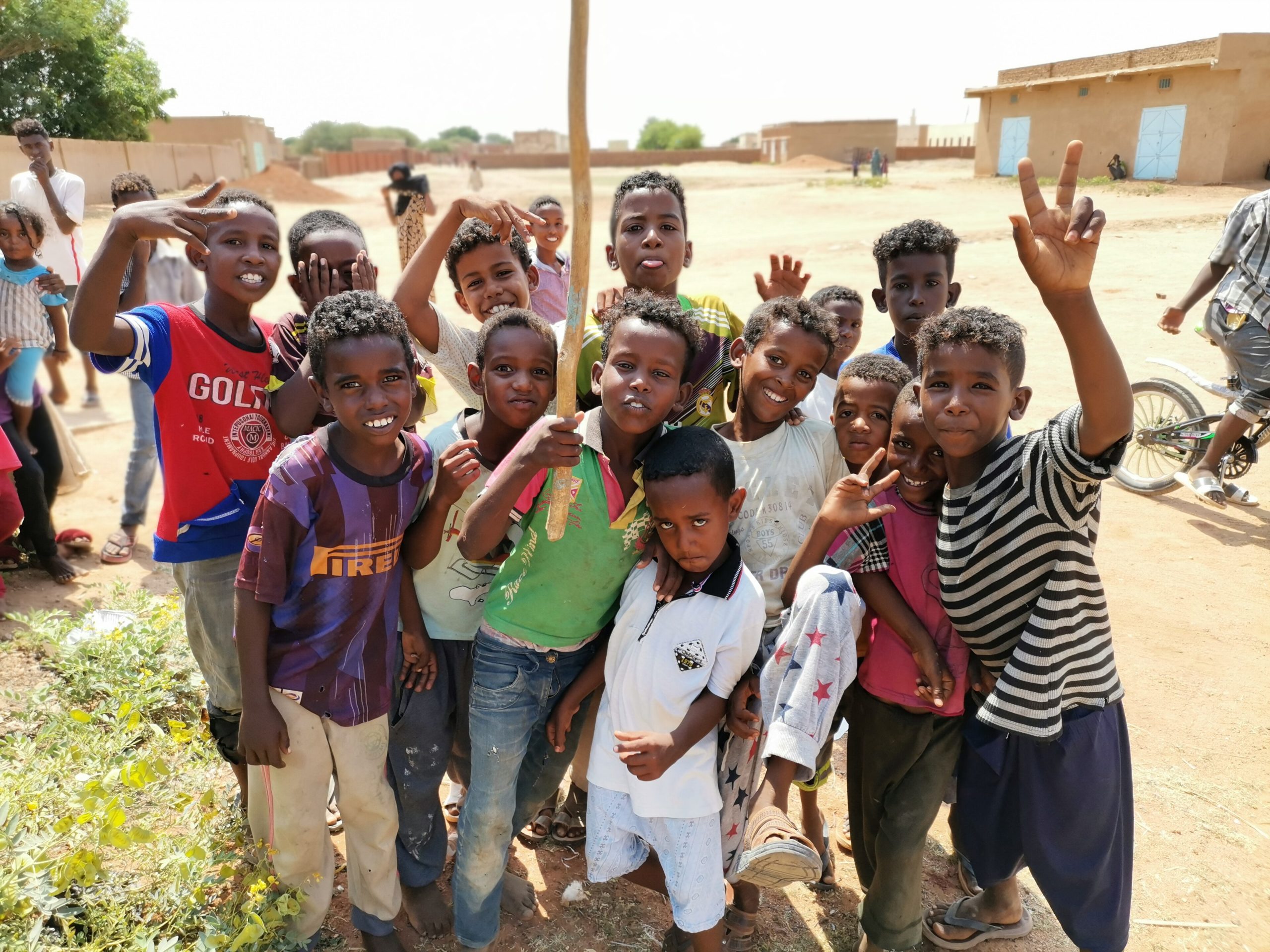
Children’s health is not only disrupted in poor countries by conflict and lacking equipment; the 2019-2020 pandemic demonstrated how children’s health can be drastically altered even in the presence of abundance. Nevertheless, those in poorer countries also suffered the loss of essential health services, such as vaccinations, due to the pandemic.
Many non-governmental organizations and international aid donors have made several efforts to reverse the detrimental effects and help children worldwide.
The Big Catch-Up: Over 18 Million Children Vaccinated
The “Big Catch-Up” was launched in 2023 with the primary goal of addressing vaccination declines caused by COVID-19’s disruptions: facilities were overwhelmed for pandemic years, causing routine services to come to a halt altogether. This resulted in the rapid rise in the number of zero-dose children by the millions.
The global program received backing from UNICEF, Gavi, the Vaccine Alliance, and the World Health Organization to distribute over 100 million doses to an estimated 18.3 million children across 36 countries. The initiative took two years, concluding on April 24, 2026.
“Thanks to this accomplishment, not only are millions of children now protected from preventable diseases, but so are their communities, for generations to come,” Gavi CEO Dr. Sania Nishtar said.
Final data is yet to be released, but with implementation having concluded in March, the partaking agencies announced the initiative is expected to meet its target of reaching 21 million children, primarily in low- and lower-middle-income nations in Africa and Asia.
It was mostly in these areas where zero-dose children of up to 5 years of age received vaccinations: in Ethiopia, over 2.5 million children received their first dose of the first diphtheria, tetanus, and pertussis vaccine (DTP1); nearly 5 million received the inactivated polio vaccine (IPV); and more than 4 million received measles vaccines. In Nigeria, 2 million received their DTP1, along with 3.4 million IPVs administered among millions of other doses of other vaccines.
In 12 African countries, the initiative resulted in the vaccination of 60% of all zero-dose children under five, based on how many children missed their DPT1 vaccine.
All participating countries received technical aid from UNICEF and WHO as well as funding from Gavi thanks to the program. UNICEF and its partners continue the work during World Immunization Week, calling on countries to sustain vaccination at every age.
Sustained Efforts Needed Amid Unprecedented Challenges
The Big Catch-Up highlights that a catch-up effort, even one so successful, requires more resources and should only be an effort to stop the gap from widening. Building sustainable programs and investing in systemic improvements is the most effective way to protect children’s health across the world.
The EU and UNICEF Partnership, guided by UNICEF’s Health Strategy 2016-2030 and the EU’s global priorities on global health, focuses on strengthening health systems in the long term. Their efforts aid primary health care reforms, including digitalization, financing insurance systems and supply chains, as well as integrating Water, Sanitation, and Hygiene (WASH) with health services. The program prioritizes but is not restricted to women, newborns, adolescents, and marginalized children, especially in vulnerable and crisis-affected countries.
UNICEF also extends its efforts to mental health, “an area of growing concern in the midst of global conflict, crises and climate change.” According to UNICEF USA, at least 1 out of 7 young people between the ages of 10 and 19 has been diagnosed with a mental health disorder worldwide. Due to these statistics, it is increasingly recognized as a fundamental part of children’s well-being.
This issue is one that affects wealthy countries as well, where, especially since COVID, children have experienced severe declines in academic performance and physical and mental health.
Significant Declines from 2018 to 2022
The latest Innocenti Report Card 19 from UNICEF’s Global Office of Research and Foresight unearthed how the unpredictability of the world produced troubling trends that could undermine children’s well-being. Their report, released May 2025, ranks 43 countries in the Organisation for Economic Co-operation and Development (OECD) and the European Union (EU) based on children and adolescents’ mental well-being, physical health, and skills.
In general, it found that these kids are less happy, more likely to be overweight or obese, and not doing well in school.
The progress of the past 25 years in these countries is now showing signs of reversal. COVID-19 caused significant academic disruption; digital advancement and democratic shifts pose threats to a stable future, while urban air pollution, synthetics and microplastics in their environment, and even toxic materials in their clothes can cause harm.
Such issues affect poor countries disproportionately but are also prevalent in wealthy states.
Despite these threats, child mortality decreased in most countries, while social skills remained largely the same. The adolescent suicide rates are increasing in some countries but decreasing in just as many. However, life satisfaction, overweight tendencies, and academic skills show considerable negative trends across most countries.
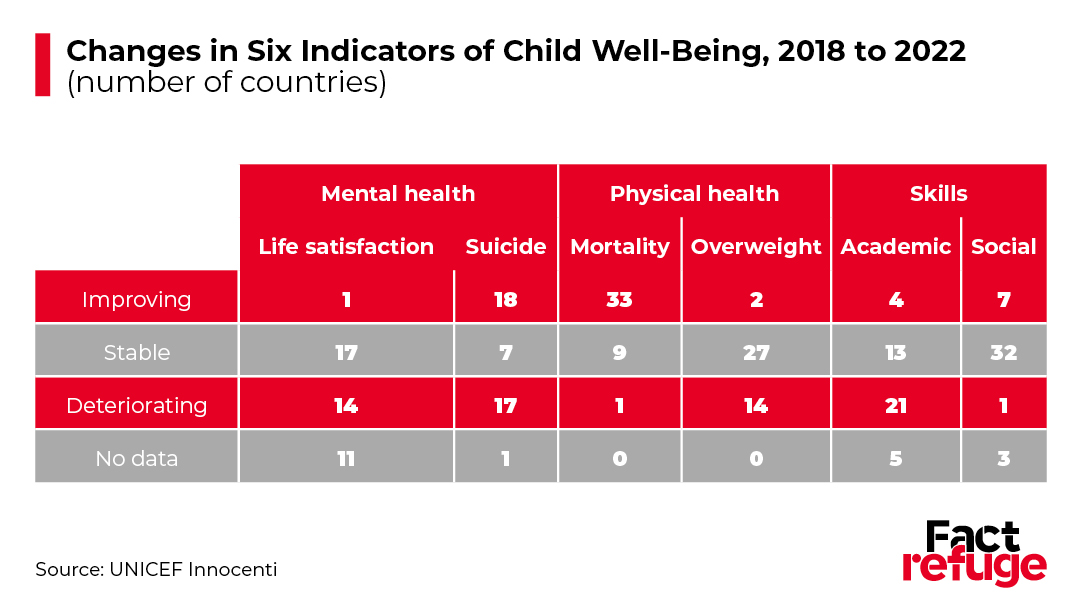
While UNICEF prioritizes children living in conflict and disaster zones, they also advocate for more open dialogue in wealthier states, as all countries face a gap between mental health needs and quality services.
A Brighter Future
To provide the best and most essential help younger generations require, those providing aid must adapt to the changing world. Armed conflict and poverty remain main causes for concern, but mental health, climate change, and the digitalization of our society all contribute to their well-being as well.
Untreated mental and physical health issues contribute to children falling behind both socially and academically in both poor and wealthy states. The pandemic has demonstrated a striking example for this.
During Mental Health Awareness Month, parents, teachers, and aid workers must all remember that each child may face a different need, but they all require urgent and early support to be able to grow.