
The International Court of Justice made a historic ruling on November 19, 2026: Myanmar committed genocide against the Rohingya people during their military campaign in 2017. The ruling also included an order to allow people who fled the violence to return home.
This is the first time the court has ruled that a state committed genocide and creates a potential precedent for a similar case in the hands of the World Court regarding Gaza and Ukraine.
The Court Ruling
International Court of Justice President Yuji Iwasawa said the 9-6 decisionfound that Myanmar “has committed genocide against the Rohingya group in northern Rakhine state, in violation of its obligations under the Genocide Convention.”
“The court finds that Myanmar’s security forces killed thousands of Rohingya civilians, perpetrated widespread acts of sexual violence, as well as acts of extreme violence against children, and attacked fleeing Rohingya as they sought to flee in large numbers.”
The Hague’s judgement in the Gambia v. Myanmar case has been highly anticipated since the West African nation filed the complaint in 2019. The ruling rests on the interpretation of genocide written into the 1948 U.N. Genocide Convention, the first major international treaty approved by the United Nations General Assembly.
Implementation regarding returning Rohingya, however, has been called into question; the court can only report noncompliance to the UN Security Council and can do little else to enforce the ruling.
Myanmar started the military campaign in August 2017 in response to a Rohingya insurgency. Gambia’s case focused on the so-called “clearance operations,” which, according to accusations, led to mass rape and killings and the burning of thousands of homes. The campaign was the continuation of a decade-long persecution of the Muslim minority.
The exact death toll of the 2017 attack may never be known, but at least 10,000 Rohingya are thought to have died, and roughly 750,000 Rohingya fled to neighboring Bangladesh.
Reactions
Myanmar has rejected the court ruling. Khine Khine Soe, spokeswoman for Myanmar’s President Min Aung Hlaing, said “political bodies” like the ICJ “should not abuse their judicial authority.”
“Not all 15 judges agreed with the decision,” she told reporters in the capital Naypyitaw. “So it was not a decision made unanimously. I would say that it was unfair.”
Min Aung Hlaing was the military’s commander-in-chief during the 2017 operations before assuming power as president after a military coup in 2021.
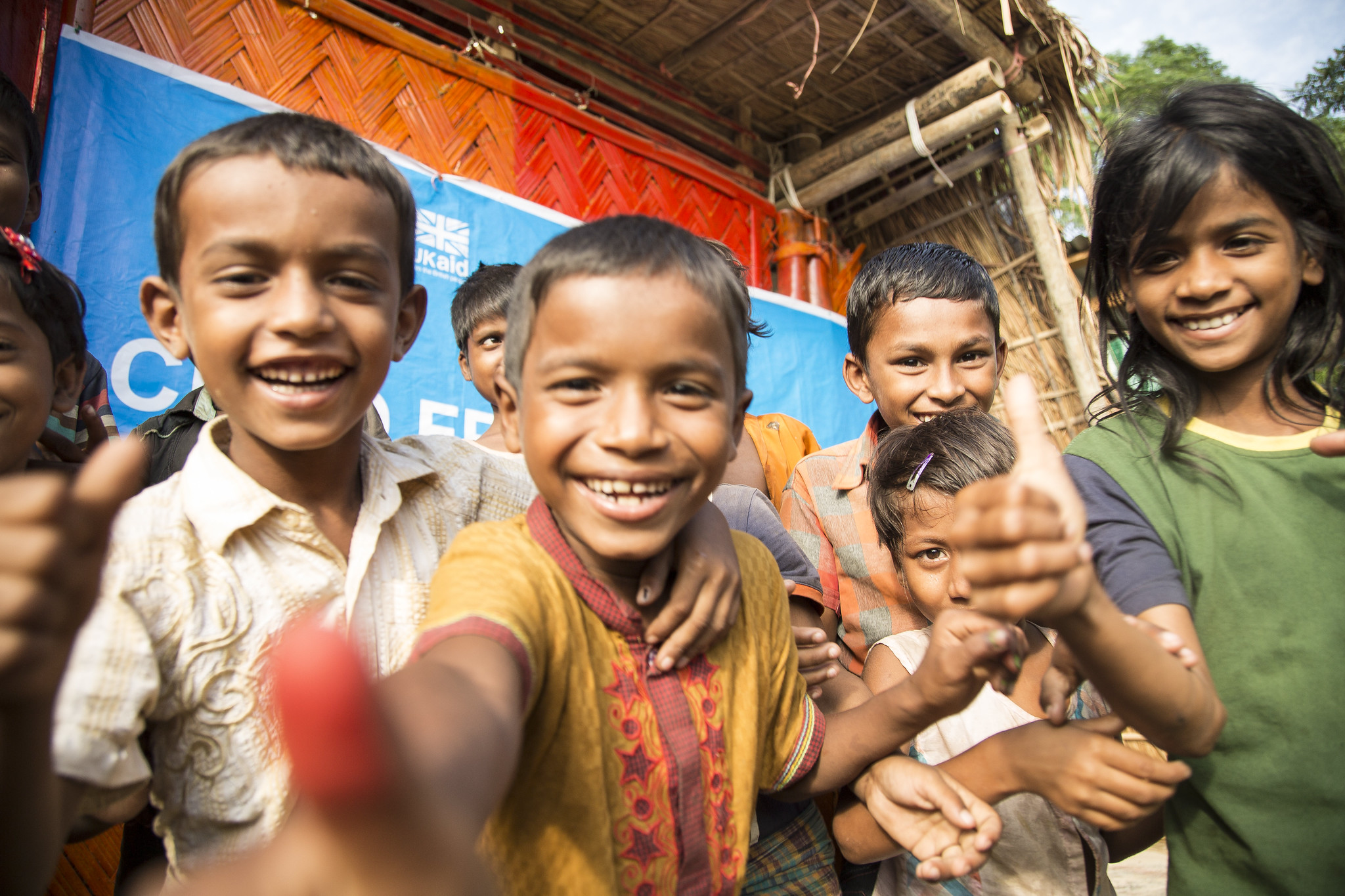
Cox’s Bazar, the refugee camp housing over 1.2 million Rohingya refugees in neighboring Bangladesh, rejoiced hearing the news. Mohammad Rofik, a Rohingya community leader at the camp, said the verdict was “a victory” for them, recognizing the people’s suffering, though “not an end” to their ordeal.
“Justice has started,” he said, adding that the Rohingya still have “a long way to go.”
“The victory belongs to the Rohingya,” Gambian Justice Minister Dawda Jallow stated outside the courtroom. “They survived, they testified, and today they were believed. Many of them are here with our delegation from across the world and from the refugee camps in Cox’s Bazar. Their courage made this judgment possible.”
The Case Could Have Global Impact
Others are also interested in the ruling; South Africa has a case lodged against Israel regarding military action in Gaza, but the case is years from completion. Ukraine also has a case against Russia over the February 2022 invasion; shortly after, Russia stated the accusations were fabricated.
Maria Elena Vignoli, senior international justice counsel at Human Rights Watch, said the ruling “provides a significant precedent for victims of genocide, and other grave crimes, across the world in their own quest for justice.”
