
Nearly 5.4 million people in Somalia could face famine by the end of 2026, while almost 26,000 displaced people in Baidoa are expected to endure catastrophic levels of food insecurity, according to a recently published report by food security organization Integrated Food Security Phase Classification. At the same time, deep funding shortages are forcing cuts to the food, health and nutrition services that many families rely on.
According to the IPC, expected El Niño-driven flooding could hit communities already struggling with drought, conflict, displacement and high food prices. Between July and September, an estimated 5.1 million people – 26 percent of the population analysed – were already living with Crisis-level acute food insecurity or worse. Nearly 1.4 million were in Emergency.
Compared with the same period in 2025, the number of people facing Crisis conditions or worse has risen by around 50 percent.
The outlook for October through December is worse. The IPC expects about 5.4 million people, or 28 percent of the population analysed, to face Crisis-level hunger or worse. Around 1.48 million are projected to be in Emergency, while almost 26,000 people could fall into Catastrophe, the most severe household-level classification.
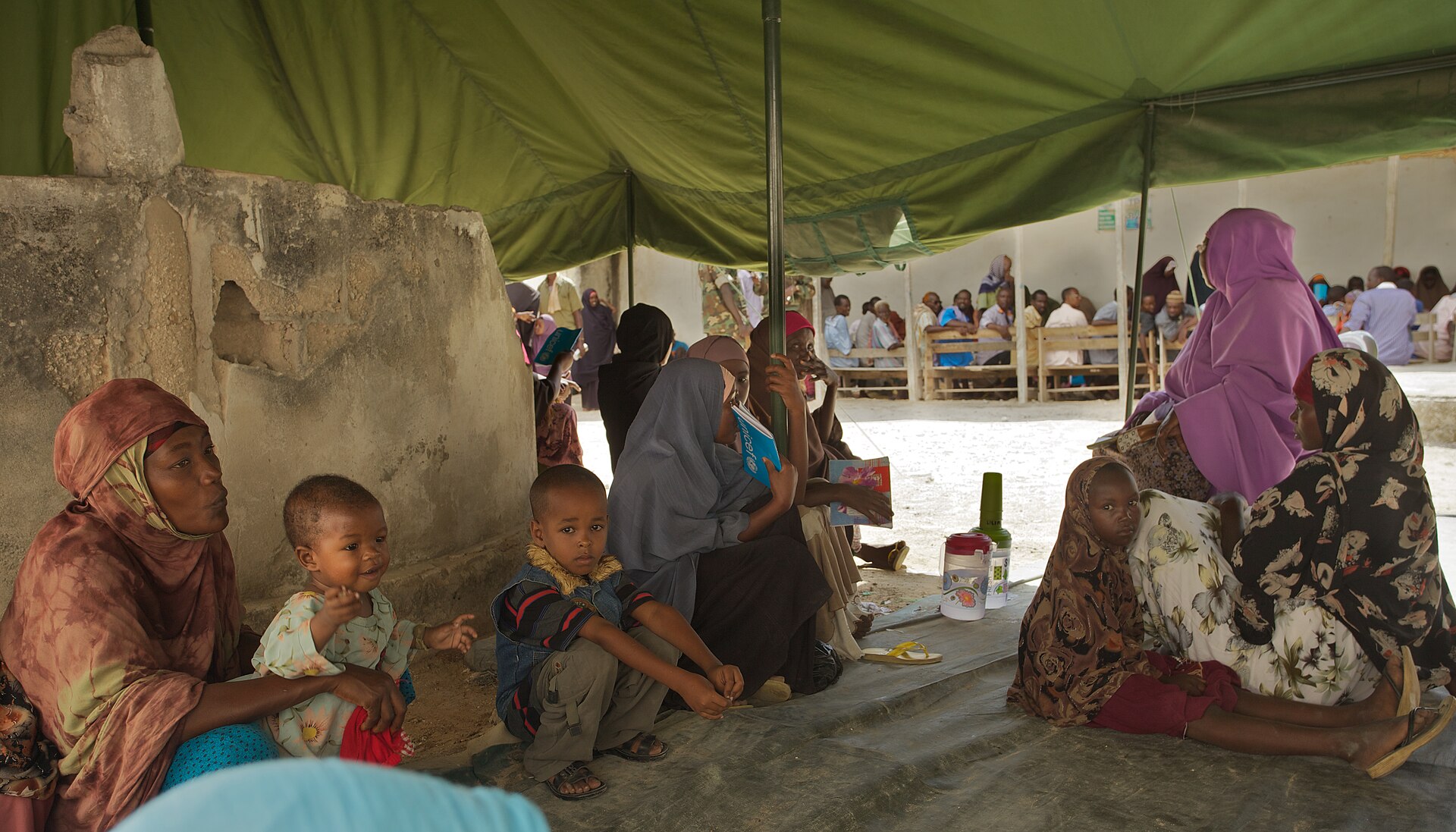
The situation is particularly serious for displaced people in Baidoa, in Bay region. Under the IPC’s most likely scenario, about 25,760 people there are expected to face Catastrophe conditions.
If the rains bring more severe flooding and displacement than expected, food prices rise further and humanitarian aid fails to reach those most in need, the situation could deteriorate even further. In that case, the IPC says displaced communities in Baidoa could face a risk of Famine between October and December.
Heavy Rains Could Bring Relief — and Destruction
The October-to-December Deyr rainy season is expected to bring average to above-average rainfall across much of Somalia.
For some pastoral communities, those rains could bring badly needed relief. Water sources may recover, grazing conditions could improve, and healthier livestock could mean more milk and income for families. But for people living along rivers and in low-lying areas, the same rainfall could be devastating.
The IPC expects severe flooding to damage farmland and infrastructure, disrupt markets and livelihoods, force families from their homes and make it harder for humanitarian workers to reach affected communities. Flood-prone settlements around Baidoa, Beletweyne, Qardho and Mogadishu are among those facing the greatest concern.
Nearly Two Million Children Need Treatment for Acute Malnutrition
The IPC estimates that 1.92 million children aged between six months and five years will suffer, or are expected to suffer, from acute malnutrition between July 2026 and June 2027. Around 433,000 cases are expected to involve severe acute malnutrition.
Nearly 62 percent of those cases are concentrated in southern Somalia.
The situation could worsen during the final months of 2026. Flooding can contaminate water supplies, cut communities off from clinics and nutrition centres, and create conditions in which diarrhoeal diseases and other illnesses spread more easily.
Flooding could force more people from low-lying and riverine areas into already crowded displacement sites. That would place even greater pressure on water supplies, sanitation systems and health services.
Humanitarian Assistance Is Shrinking as Needs Grow
Somalia’s humanitarian response plan was only 31 percent funded as of September 8, according to figures cited in the IPC analysis. Funding shortages have contributed to the closure of 233 nutrition sites and 380 health facilities.
For families, those closures can mean longer journeys for treatment – or no treatment at all. They reduce access to vaccinations, nutrition support and basic healthcare at a time when disease and malnutrition are already widespread.
Food assistance is also being scaled back sharply. Between July and September, humanitarian food security assistance was expected to reach an average of about 411,500 people, while 5.1 million people were facing Crisis-level food insecurity or worse.
From October through December, planned assistance is expected to fall to roughly 70,400 people a month. That amounts to just 1.3 percent of the 5.4 million people projected to need urgent action.
Somalia now faces a difficult and uneven rainy season. In some places, the rains could restore water and pasture after months of hardship. In others, they could wash away homes, crops and livelihoods.
For millions of people who have already endured drought, displacement, high prices and repeated crises, there is little left to fall back on.