
The United Nations peacekeeping mission in Western Sahara is coming to an end after the Security Council failed to renew its mandate, marking a significant development in one of Africa’s longest-running territorial disputes. The decision follows a diplomatic confrontation involving the United States, Russia, Morocco and Algeria over the political future of Western Sahara, a territory that has remained disputed for approximately five decades.
Background of the Western Sahara Conflict
The conflict dates back to 1975–1976, when Spain withdrew from its former colony. Morocco claims sovereignty over Western Sahara, while the Polisario Front, supported by Algeria, seeks independence for the territory. Years of armed confrontation led to a United Nations-brokered ceasefire in 1991 and the establishment of the UN Mission for the Referendum in Western Sahara (MINURSO). The mission was intended to monitor the ceasefire and facilitate a referendum on the territory’s political future. However, disagreements over voter eligibility and the terms of self-determination prevented the referendum from taking place.
The latest diplomatic crisis followed the Security Council’s endorsement in 2025 of Morocco’s proposal to grant Western Sahara autonomy under Moroccan sovereignty as the most feasible basis for resolving the dispute.
In October 2026, Russia vetoed a United States-drafted resolution that would have reaffirmed support for Morocco’s autonomy proposal while extending the UN mission’s mandate. A competing Russian proposal also failed to secure sufficient support in the Security Council. Consequently, MINURSO’s mandate expired on October 31, bringing its 35-year presence in Western Sahara to an end.
The United Nations subsequently began preparations to withdraw the mission’s personnel and equipment.
Morocco welcomed the non-renewal of the mandate, while Algeria and the Polisario Front opposed the outcome and expressed concern about its implications for the political process.
Refugee Situation in Southwestern Algeria
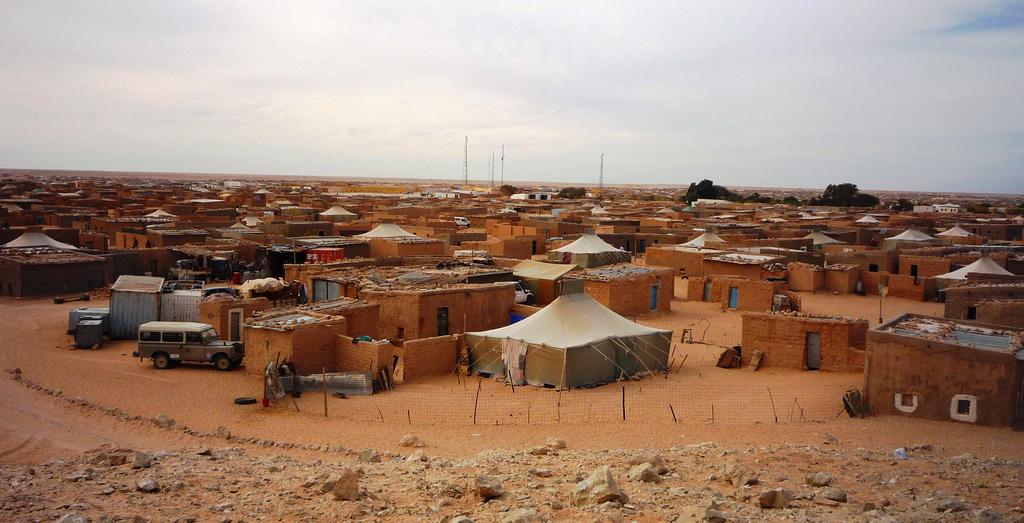
The unresolved conflict continues to affect Sahrawi refugees living in camps near Tindouf, southwestern Algeria. Five refugee camps administered by the Polisario Front accommodate populations displaced during the conflict and their descendants. Algeria and the Polisario Front estimate that more than 160,000 people live in these camps. The United Nations refugee agency provides assistance to approximately 90,000 refugees identified as particularly vulnerable. Morocco disputes the population estimates, pointing to the absence of a comprehensive UN census.
Living conditions in the camps remain challenging because of the desert environment, limited water resources, economic restrictions and dependence on international humanitarian assistance.
According to the World Food Programme, more than 80 percent of camp residents depend on humanitarian support to meet their basic food requirements.
Reductions in humanitarian funding have added pressure to assistance programmes serving the displaced population.
Regional and International Implications
The end of MINURSO introduces further uncertainty into efforts to resolve the Western Sahara dispute. Morocco continues to advocate autonomy under its sovereignty, while the Polisario Front maintains its demand for self-determination, including the possibility of independence. Algeria remains a major supporter of the Polisario Front, and disagreements between Algeria and Morocco continue to influence diplomatic efforts concerning the territory. The failure to extend the UN mission also raises questions about future ceasefire monitoring, regional security and the international community’s role in facilitating negotiations.
