
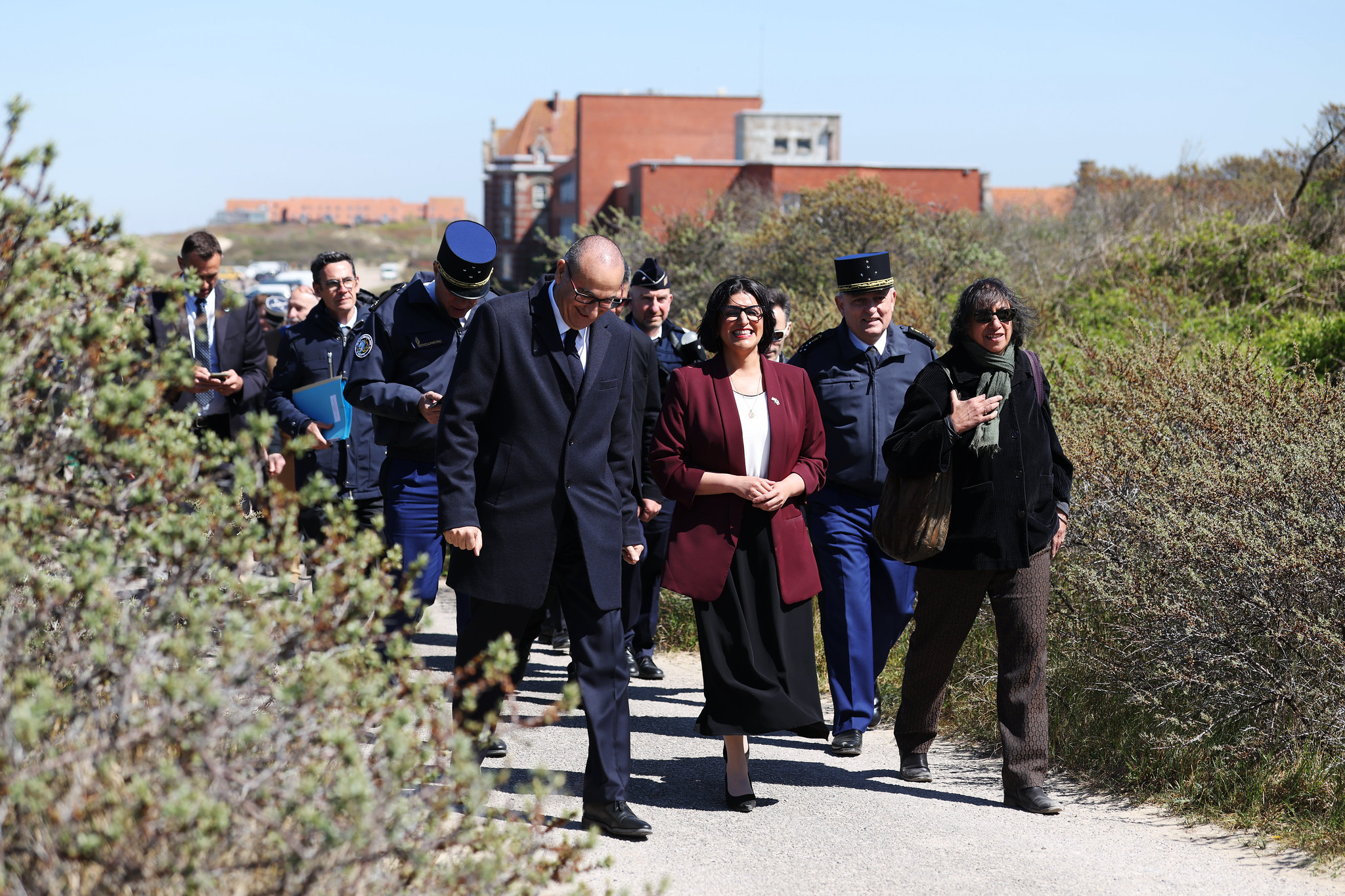
The United Kingdom and France have reached a new three-year agreement worth approximately £660-662 million aimed at reducing illegal small boat crossings across the English Channel. The deal was signed on Thursday by Home Secretary Shabana Mahmood and marks a significant escalation in bilateral cooperation on migration control.
Hundreds of Millions of Pounds Deal with Strict Restrictions
According to BBC reporting the agreement includes deployment of at least 50 police officers trained in “riot and crowd control tactics” to French beaches.
The UK will fund significant equipment upgrades, including drones, two helicopters, and advanced camera systems designed to intercept people smugglers before they reach the water.
A notable provision of the deal is its conditional funding structure. For the first time, UK ministers have indicated that approximately £100 million of funding could be redirected or withdrawn after one year if insufficient progress is made in stopping crossings.

UK Home Office/Flickr
Part of the funding – £160m – will only be paid if the new tactics to reduce Channel crossings succeed.
The Guardian reports, noting this represents the first “payment-by-results” scheme for Channel migration policy.
Under the agreement, 1,100 enforcement, intelligence, and military officers will operate in northern France—an increase of approximately 40 percent from the previous arrangement.
This expanded presence includes five new police units, additional maritime officers, and an expanded intelligence unit growing from 18 to 30 specialists.
Criticism from Advocacy Organizations
The agreement has received mixed reactions across the political spectrum. Conservatives criticized what they termed “half a billion pounds of our money with no conditions at all,” while Reform UK accused the government of funding “a system that has already failed.”
Home Secretary Mahmood described the deal as a “landmark agreement” that would provide authorities with flexibility to adapt as smuggling tactics change. French Interior Minister Laurent Nunez stated the agreement “empowers our security forces to continue their crucial work in combating perilous Channel crossings.”
Sile Reynolds, head of asylum advocacy at Freedom from Torture, called the escalation “deeply alarming,” warning that funding riot control equipment would mean “paying for police boots and batons to be wielded indiscriminately against men, women and children on the beaches of northern France.”
The Refugee Council’s director of external affairs, Imran Hussain, argued that “policing alone will not prevent desperate people from turning to dangerous small boats in the first place,” suggesting the government is “treating the symptom not the cause.”
During a visit to a migrant camp in northern France, the BBC interviewed individuals considering the crossing journey.
One of them explained that while he was homeless in France, “in the UK he would be able to live as a normal human being.” Another woman cited the UK’s democratic protections as a motivating factor for the dangerous journey.
Crossing numbers have risen substantially in recent years, with 41,472 people arriving in the UK by small boat in 2025 alone. As of early 2026, over 6,000 crossings had already been recorded, with 602 migrants arriving in Dover on nine boats in a single Saturday in April.
The new deal also includes provisions for a removal centre in Dunkirk, expected to be completed by the end of the year. The 140-capacity facility, staffed by more than 200 officers, will focus on deporting migrants from the top 10 countries of origin for Channel crossings, including Eritrea, Afghanistan, Iran, Sudan, Somalia, Ethiopia, Iraq, Syria, Vietnam, and Yemen.
