
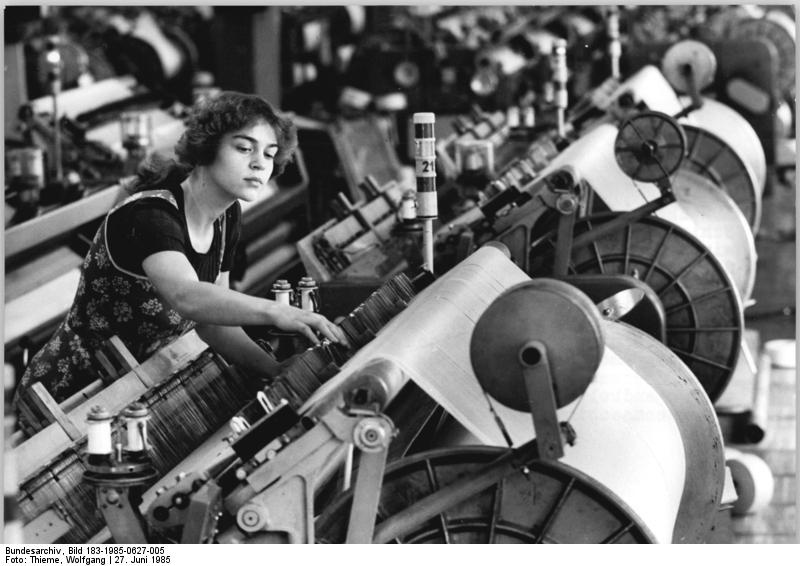
West Germany signed an agreement with Turkey to allow the temporary recruitment of “guest workers” on October 30, 1961. Recruitment ended in 1973, with over 870,000 men and women having migrated to Germany to work in coal mines, do piecework on the assembly lines, or clean factory floors.
However, those who settled during the scheme now face poverty, as their pensions are significantly lower than those of German pensioners, leading more Turkish retirees to rely on top-up welfare benefits.
The Scheme’s Legacy
“We’ve seen success in many areas, such as education. Today, we have a large number of college graduates, and we’ve seen professional advancement. And successful political careers. Take Baden-Württemberg’s state premier, Cem Özdemir, for example,” integration expert Haci-Halil Uslucan told German international broadcaster Deutsche Welle.
Cem Özdemir’s parents also arrived under the scheme in the 1960s to Germany; his father worked in a textile factory, while his mother had her own business as a seamstress. He often refers to himself as an “Anatolian Swabian,” who needed no integration, as his home has always been Germany.
Uslucan himself is an example; his father worked in the textile industry before bringing his wife and two sons to the country. Uslucan, now a professor of contemporary Turkish studies at the University of Duiburg-Essen with a PhD in psychology, is addressing the dark side arising for those that were involved in the program in his latest research.
While loneliness affects many, poverty is also impacting some Turks who are now approaching retirement age.
During a commemoration ceremony celebrating the courage of the first generation of immigrants and their contribution to German society, North Rhine-Westphalia’s premier, Henrik Wüst said: “They have made our country more diverse, more open, and stronger,” acknowledging that “We will have reached our goal only once name, skin color and religion no longer matter.” But for now, issues remain.
Discrimination and Poverty
Uslucan’s research found that the poverty rate among immigrants in Germany is estimated to be between 25 and 30 percent, double the number for Germans, about 12-14 percent. Disability and early retirement rates are also higher among migrants, as the first generation performed heavy physical labor jobs.
According to Uslucan, they are also twice as likely to become unemployed 10 years before reaching retirement age.
Since they are more likely to have had employment gaps and worked low-wage sectors, pensions are generally lower as well: an analysis by Germany’s pension insurance fund (DRV) for the Mediendienst Integration (The Media Service Integration), a research service for journalists on migration topics, those with Turkish citizenship receive an average of about €890 ($997) in pension benefits per month – about €360 less than the average €1,250 per month German citizens receive.
Germans also find it easier to work during retirement, unlike migrants who tend to be less qualified and physically unfit, due to a lifetime of hard physical jobs.
“Basically, they face a whole series of disadvantages or hardships in life. That generation of guest workers was brought to Germany and then had to do the worst jobs here, whereas many Germans were able to progress through education and training,” Janina Söhn of the Institute for Sociological Research (SOFI) at Göttingen University, who also researches the topic, said.
Debates Continue
Debates around integration and increasing discrimination continue in German society. According to Söhn, nearly one-third of immigrants are at risk of poverty.
“This group faces even greater hardship than, for example, women in general, who already have a higher risk of poverty. And when you then look specifically at female migrants living alone, the figures are truly dire and alarming.”
The image used is illustrative only.
