
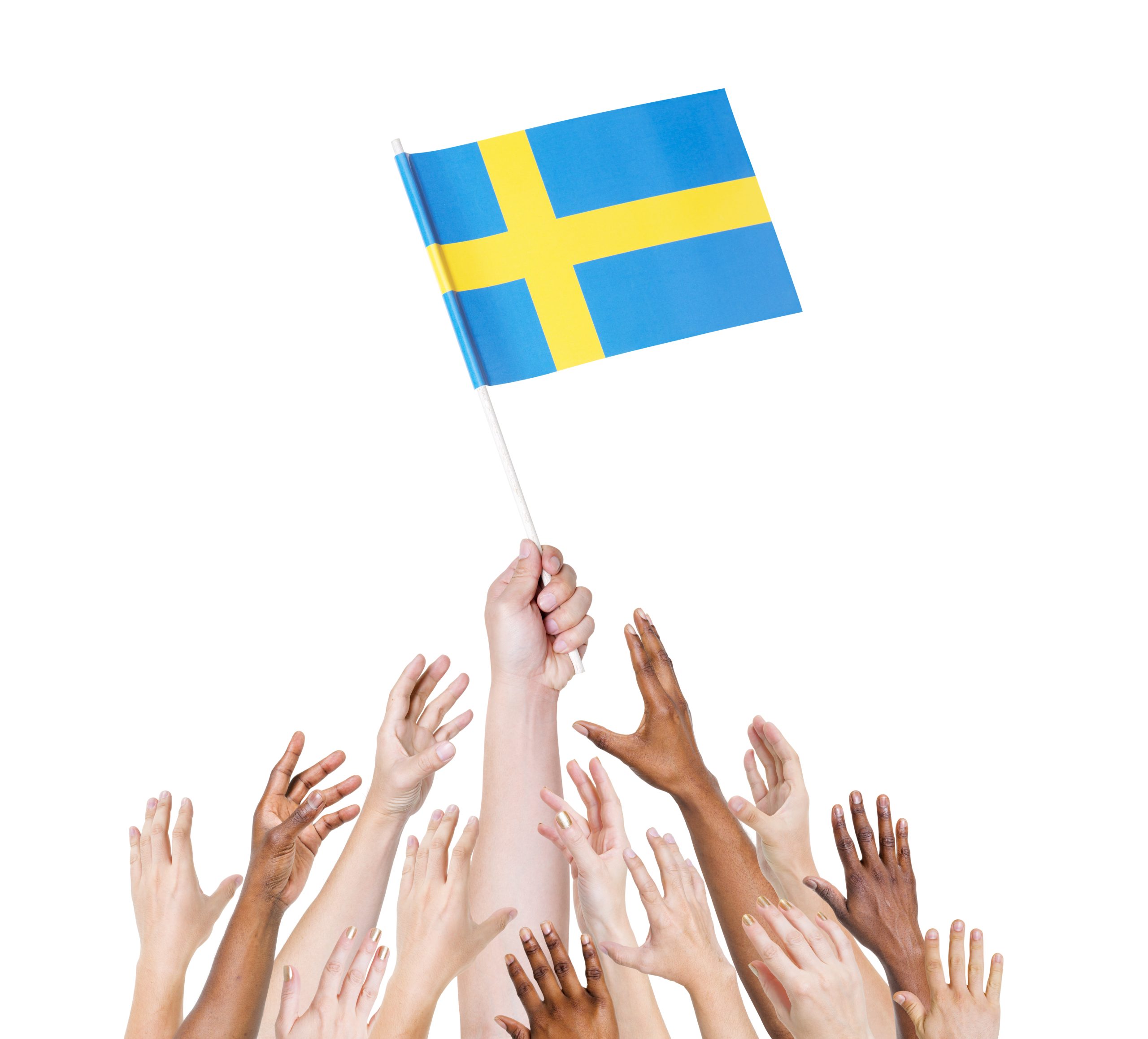
With only a few months until the September 13 Swedish elections, several new reforms are poised to make the country’s treatment of migrants and refugees worse. Minors born in Sweden, as well as people who have lived there for decades and have Swedish citizen children, are now at risk of deportation.
Since gaining office in October 2022, the conservative government backed by the far-right Swedish Democrats has stated that returns have increased by “at least 60 percent.”
More than 100,000 Affected
The crackdown is far from over: just months before the September 13 legislative elections, a series of revisions are set to go into effect, tightening the laws even more—despite an increasing number of voices denouncing the collateral damage of a strategy that targets individuals indiscriminately.
On June 1, the minimum monthly salary for obtaining a work visa will increase to 33,390 kronor (€3,074). Five days later, the requirements for attaining Swedish citizenship would be amended retroactively, with no transitional provisions, affecting over 100,000 people awaiting naturalization.
Then, on July 12, refugees’ entitlement to permanent residency will be removed. Initially, the government planned to replace all permanent resident permits with temporary ones.
The bill would have affected 118,000 people, many of whom have lived in Sweden for over a decade, and would have kept immigration officials busy for eight years.
The coalition postponed the change as worries about its legality surfaced.
It did, however, keep the “whistleblower law,” which will go into effect on July 13 and force employees of six public bodies, including the Employment Agency and the Social Insurance Office, to report to the police any person suspected of being undocumented in Sweden.
2015 Refugee Crisis: The Turning Point
Since the start of the year, shattered lives have flooded the Swedish press, revealing the extent of the country’s hardening migration policy and its consequences.
Just over ten years ago, the picture was different. 2015, when Sweden received an unprecedented number of asylum seekers. Around 163,000 people sought protection in Sweden, with about 100,000 arriving during a few intense autumn months.
The agency says the increase was so sudden that ordinary reception capacity was overwhelmed, leading to emergency accommodation in dormitories, tents, hotels, evacuation housing, and municipality-organized shelters.
Before the crisis in 2014 the number of asylum applications had increased, over 80,000 people had sought protection in Sweden. During the first half of 2015, Sweden’s share of the total number of asylum seekers in Europe had decreased. As late as July, the Swedish Migration Agency’s forecast painted a picture of a Europe with an increasing number of asylum seekers but where Sweden had lost its attractiveness due to long processing times and inadequate integration. This primary scenario would turn out to be wrong.
From the end of July to August 2015, the number of asylum seekers doubled, from around 1,500 to 3,000 people per week. The Swedish Migration Agency’s next forecast was released in October, the number of applicants had reached over 9,000 per week.
Sweden received more than 20 percent of all asylum seekers in the EU+ countries (EU member states supplemented with Norway, Switzerland, and Liechtenstein).
The Migration Agency described a situation unprecedented in modern times; a humanitarian crisis where the EU’s fundamental principles and regulated asylum migration had been rendered inoperative. The authority’s ordinary capacity and preparedness were insufficient; there was an acute shortage of accommodation, and extraordinary solutions were requested.
The largest groups seeking asylum in Sweden were from Syria, Afghanistan, and Iraq. Syria was the largest country of origin, with about 50,900 asylum seekers; Afghanistan followed with about 42,100, including roughly 21,000 unaccompanied children.
In total, more than 30,000 unaccompanied children sought protection in Sweden that year.
How Did the Swedish Refugee System Transform?
Sweden’s response in 2015 revealed genuine limitations. Even a wealthy and well-organized state found itself scurrying. Municipalities were unevenly impacted.
Under extremely difficult circumstances, the asylum system struggled to process applications, provide accommodation, and maintain legal certainty. When institutions become overburdened, a decent society cannot rely solely on improvisation and benevolence.
That explains why the political shift in November 2015 was so significant. Border controls, temporary residence permits, stricter asylum regulations, and ID checks signaled a change from emergency response to deterrence and limitation. Some saw these steps as vital to reclaim control.
On November 12, 2015, Sweden reinstated border controls against other EU nations, a significant departure from the previous open internal-border posture.
Two days later, the government announced temporary residence permits, tougher asylum regulations, and future ID checks on buses, trains, and boats heading to Sweden.
The 2016 temporary asylum and family reunification bill limited refugees’ licenses to three years and tightened family ties.
By 2019, Prime Minister Stefan Löfven had openly said that previous integration had been “too poor,” thus ending the era of entirely open-door policies that had gained political support at the time.
Restrictive Asylum Law Changes
The “historic” government news conference on November 24, 2015, resulted in laws aiming to reduce Sweden’s asylum rules to the EU minimum and prevent fresh entrants.
Sweden shifted away from the former practice of issuing permanent permits. The temporary law made residence permits for protection beneficiaries generally time-limited. That the modification went into effect on July 20, 2016, and lasted for for three years.
On June 20, 2019, the Swedish Parliament approved a two-year renewal of the temporary measure. As a result, the rules outlined in the ‘New Aliens Act’ in 2021.
Temporary residence permits became the norm for recipients of international protection, while resettled refugees might still get permanent visas.
Sweden Became a Hub of Crime
After 2015 Sweden experienced a significant surge in violent crime, particularly organized gang violence and gun crime, which has made it a noted hub for criminal activity in Europe.
Sweden is currently battling a wave of gang violence, often involving teenagers who are recruited by criminal networks to carry out violent acts, including vandalism, bombings and contract murder.
In January 2025 alone, there were approximately 30 gang-related explosions reported in the country, often in residential areas and mostly concentrated in the capital Stockholm.
Various reports between 2024 and 2026 show the country, including cities like Malmö, faces high rates of shootings and bombings, with police struggling to control “especially vulnerable areas.
In 2023, Sweden’s coalition government planned to introduce reforms requiring immigrants from countries outside the European Union to learn Swedish and compete for jobs in the country’s highly skilled labor market.
The leaders of the three-party coalition and the far-right Sweden Democrats (SD) have claimed that Sweden has “significant problems” with foreign-born people who are unemployed and live on benefits.