

Migration from India and Bangladesh has become a structurally important—albeit uneven—part of Europe’s labor market. While Indian migrants are frequently linked with high-skilled industries such as IT and healthcare, Bangladeshi migrants are more likely to work in low- and semi-skilled jobs.
However, underneath this broad divide is a complex migratory system determined not just by labor demand, but also by changing migrant routes, recruitment networks, and increasingly blurred lines between legal and irregular mobility.
European economies are experiencing structural labor shortages as a result of aging populations, dropping birth rates, and altering workforce demands.
Migrants from South Asia contribute to fill vacancies in construction, tourism, and agriculture, particularly in Southern European countries. Germany, for example, utilizes mostly Indian migrants in information technology, engineering, and healthcare.
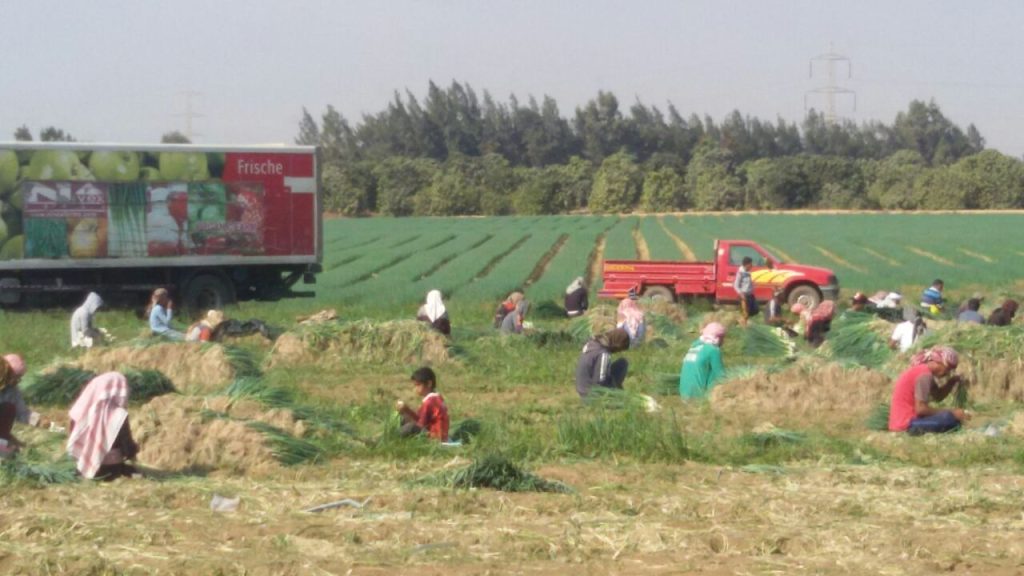
Indian working migrants in the EU are rapidly increasing, driven by high-skilled, IT-focused immigration to Germany and the Netherlands, alongside agricultural work in Italy. A new 2026 mobility agreement is further easing movement, targeting skilled labor shortages. While many are high-income, some sectors, like Italian agriculture, have low-skilled Indian and Bangladeshi workers.

Recent evidence, particularly from the 2026 Mixed Migration Centre (MMC) report on Bangladeshi migration to Italy via Libya, demonstrates how labor migration systems and irregular channels are inextricably linked rather than distinct phenomena.
Case One: Bangladeshi Working Migrants in Italy
Since 2020, Bangladeshis have been among the top three nations coming in Italy via the Central Mediterranean route. In both 2024 and 2025, they were the leading nationalities. In 2025 Bangladeshis accounted for around 31 percent of all irregular sea arrivals to Italy.
In Italy, over 70 percent of Bangladeshi workers are employed in the service sector, often earning between €800 and €1,200 per month.
Italy is proud to host the largest Bangladeshi community in continental Europe. The latest available figure is 175,000; with irregulars, it could be 200,000 people resided in the country in 2024.
“(The Bangladeshi diaspora) contributes significantly to the well-being of Italy and is also an important source of remittances for Bangladesh, with 1.2 billion euro transferred in 2022. The Bangladeshi people living in Italy are workers, entrepreneurs, and their families, with long-term prospects of staying,” the Italian ambassador in Dhaka noted.
According to the MMC, the main pull factor for the Bangladeshi nationals is that “Italy exerts a strong and multi-layered pull on prospective Bangladeshi migrants, shaped by a combination of historical opportunity, social aspiration, and practical accessibility. While the decision to migrate often begins as a response to economic hardship, Italy’s particular appeal lies in its reputation as both a land of opportunity and a more humane alternative to Gulf migration.”
While the United Kingdom hosts the largest Bangladeshi community in Europe’s broader region, Italy now has the largest Bangladeshi diaspora within the European Union, with networks extending across major cities such as Rome, Milan, and Naples. Within these enclaves, migrants can live and work using only Bangla, with minimal need for Italian or English. This linguistic and cultural familiarity lowers the psychological and practical barriers to entry, making Italy appear uniquely navigable among European destinations.
Case Two: Migration Miracle? Indian Migration to Germany
Migration from India to Germany, was limited until the early 2010s. Between 2000 and 2004, reunified Germany saw the introduction of the German Green Card, which marked the fourth wave of immigration. Of these new IT hires, a little under 4,000 were from India.
The number of Indian migrants increased dramatically only when the EU Blue Card was adopted in German law in 2012.
Before that, in 2011, Germany and India signed a bilateral social security agreement covering pension insurance. This agreement states that social security contributions made in one of the two nations must be taken into account in the other in order to protect pension entitlement.
This new residency visa makes it easier for third-country nationals to enter the EU for employment purposes. From 2005 to 2015, the number of Indian nationals in Germany more than doubled, from 40,000 to 86,000.
At the beginning of 2025, there were over 280,000 Indian nationals living in Germany as permanent residents, with more than 152,000 of them working and contributing to social insurance.
With the exception of the coronavirus year 2020, net migration has continuously increased. However, the number of Indian nationals leaving Germany has slightly increased in recent years.
As the report Capturing talent revealed “the significance of Indian migration in Europe’s economic growth and lessons from Germany’s success, Indian workers earn the highest median pay of any nationality (€5,390), including Germans, and their retention rates are among the highest in OECD countries.”
The IW (German Economic Institute) notes in their study that social insurance contributions by Indian migrants have risen by 741.4% between 2012 and the end of 2023, while “of the approximately 94,000 Indians working full-time in Germany, only 7.3 percent are 45 years or older.”
Conclusion
Indian and Bangladeshi migrant workers are essential to Europe’s labor market, sustaining industries that would otherwise face acute shortages. Yet their presence is shaped by a migration system that is increasingly complex, hybrid, and unequal. The Bangladesh–Libya–Italy route illustrates a broader reality: migration today is not simply legal or illegal, but a continuum shaped by labor demand, policy constraints, and global inequality.
For Europe, these workers represent both an economic necessity and a policy challenge. For Bangladesh and India, they are a vital source of income and development. Bridging this divide—through safer migration pathways, stronger labor protections, and more coherent policy frameworks—will be central to the future of migration between South Asia and Europe.