
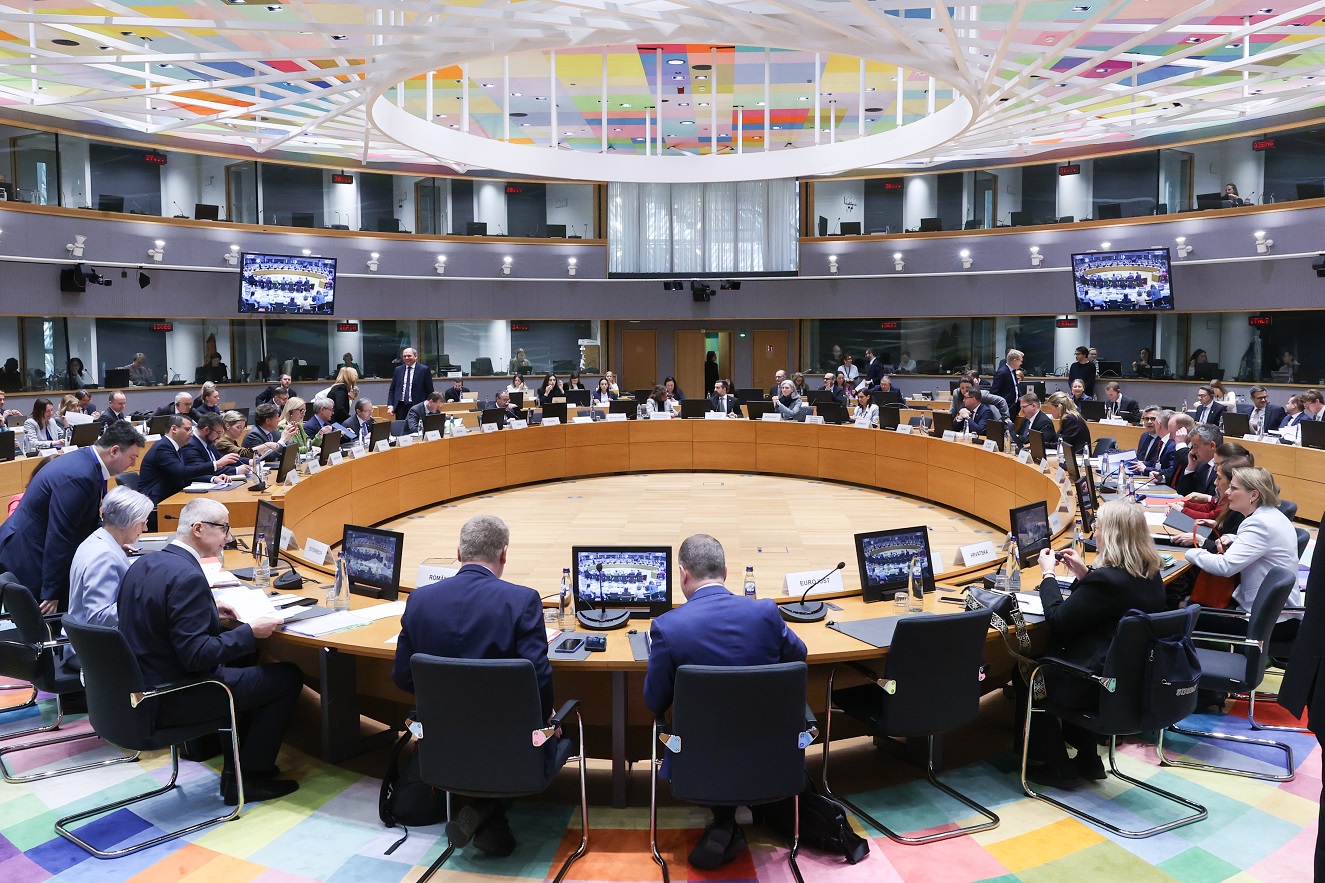
On the sidelines of the Council meeting of EU interior ministers on 5 March, in Brussels, Austria, Germany, the Netherlands, Denmark and Greece agreed on a concrete roadmap to quickly implement the controversial return centers outside the EU. Less than one-third of deportation orders are executed in the EU, yet instead of fixing broken asylum systems, leaders are constructing legal black holes abroad. UNHCR has warned such hubs “must not become zones without rights,” and Amnesty International calls them “a new low for Europe’s treatment of migrants,” predicting inevitable violations of non-refoulement and arbitrary detention Italy’s failed model in Albania — where courts ruled detention conditions illegal — offers a chilling precedent.
The December 2025 EU Return Regulation, now under parliamentary review, enables this by permitting deportations to third countries with only bilateral agreements — no oversight, no accountability. The goal is not humanitarian order but deterrence: to scare vulnerable people away by turning Europe into a fortress with no conscience.
According to Eurostat, less than one-third of the people who are ordered to leave the EU are effectively returned to their countries of origin.
As Austrian Interior Minister Gerhard Karner stated bluntly after the Brussels meeting: “We are working concretely on the joint implementation of asylum procedures and return centers outside Europe”.
According to the Council’s position on the law, which was adopted in December, member countries have the option of setting up a return center to serve as a transit hub for illegal migrants before they are returned to their home country. The regulation is part of the new EU Asylum and Migration Pact, which will come into force from 12. June 2026. The aim is to contain irregular migration.
Return Hubs—A Signal for Deterrence
The coalition already has concrete ideas on how to move ahead but prefers to keep quiet on any potential destination to avoid spoiling its chances. Any country that might agree to host the return hubs would be offered incentives in exchange.
Repatriations must be effectively enforced from Europe. ‘Return Hubs’ are to create new opportunities and send a clear signal for more returns,” said German Interior Minister Alexander Dobrindt.
In Greece – the only Southern European country participating in this initiative – government sources told journalist the move also sends a deterrent message regarding migration flows.
The idea remains highly controversial. Humanitarian organisations have repeatedly warned that such facilities could result in migrants being held in prison-like conditions, and stressed there is a grave risk of rampant human rights violations.
Third countries that could be considered — potentially in Africa or Asia (Greece is already exploring the possibility of establishing relations with Pakistan) — all circumvent their obligations under the 1951 Refugee Convention and the EU Charter of Fundamental Rights.