
Taiwan has expressed regret and condemned a prejudiced campaign carried out by a Kaohsiung City Council candidate that targeted Indian migrant workers.
Politician Lee Hung-yi put up a billboard in the city depicting the picture of a turbaned man and an inverted Indian flag with ‘no symbols.’ He said it was all intended to pledge opposition to bringing in Indian migrant workers, but others saw it as incredibly discriminatory. Experts say Taiwan–India relations are unaffected, and that the move reflects local politics, while the migrant workers’ scheme pledging to bring in thousands of Indian workers will continue.
Rapid Reaction in a Bid to Save Labor Crisis
The poster first stirred controversy after a post on social platform Threads by a man who described himself as an Indian who has lived in Taiwan for many years, in which he called the advert “blatant and direct racial discrimination.”
“I can respect that everyone has different views on migrant worker policy. You don’t want Taiwan to open up to migrant workers – that is your political stance. But expressing it in this way really doesn’t seem right,” he wrote.
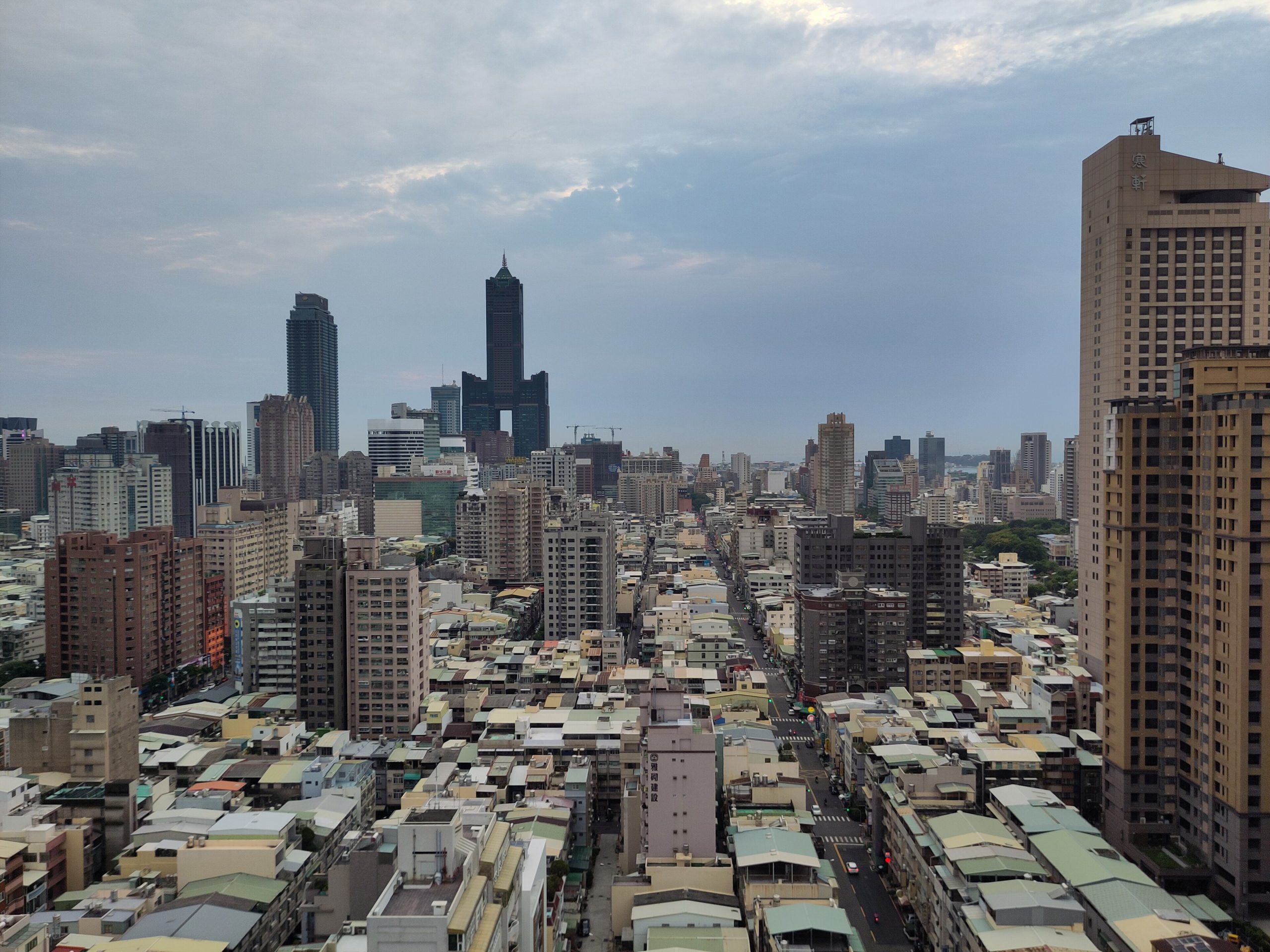
Lee, the Gangming ward chief in Kaohsiung’s Siaogang District, is running as an independent in November city elections, despite being a member of the Taiwan People’s Party. He made it clear that he was opposed to bringing in Indian workers, not migrant workers in general.
Speaking to Central News Agency (CNA), he said he worried about inadequate support and regulations, calling the situation “concerning” but unwilling to elaborate further.
“Taiwan has long been committed to planning the introduction of Indian migrant workers,” Taiwan Economic and Cultural Center (TECC) in India said on Wednesday. “We solemnly clarify that such biased remarks do not represent our stance.”
“Taiwan cherishes the values of democracy, inclusivity, and diversity, and supports people-to-people exchanges between Taiwan and India. We deeply regret and strongly condemn any form of prejudice, racism and discrimination.”
Indian Workers in Taiwan
Currently, about 3,500 to 4,000 Indians work in Taiwan with the expectation that this will rise as per a memorandum of understanding between Taiwan and India from February 2024, allowing Indian hires in manufacturing, agriculture, and construction. To better assimilate the incoming workers, Taiwan indicated it would prefer workers from northeastern states, including Assam, Mizoram, and Nagaland. The pilot involved only 1000 workers.
However, a petition signed by over 40,000 people online demanded the government retracks the plan to hire from India to address Taiwan’s labor shortages.
Taiwan has been struggling with an ageing population and lower birth rates hampering its potential. The country already hosts thousands; some estimates say 873,000 as of March 2026 and even 1 million if undocumented workers are included. Others estimated it hit 1.19 million in late 2025.
Previous efforts looked to Southeast Asian countries, such as Vietnam, Indonesia, the Philippines, and Thailand. The pilot was the first effort to branch beyond the region’s workforce.
India’s bilateral relations with Taiwan are unofficial, as Delhi adheres to the ‘One-China’ policy.
Local Rather Than National Sentiment
Taiwan experts say the controversy reflects not general Taiwanese attitude; instead, was a politicized move in the run-up to local elections.
Taiwan expert Sana Hashmi, writing on X, highlighted that the issue involved an independent candidate, who specifically characterized himself as having “no official links with the ruling party.” The Taiwan–India deal has also become a specific target for the election to gain leverage or even score points with the Communist Party of China (CPC).
Other experts corroborated Hashmi’s analysis in Firstpost, an Indian news website, adding that it was unlikely to collapse relations.
Anushka Saxena, a staff research analyst at Takshashila Institution’s Geostrategy Programme, added that the larger challenge for the workers’ scheme is the “slow pace of cooperation.” Though agreements in other areas, including marine cooperation, cyber dialogue and investment are already present, bureaucracy continues to slow progress.
