
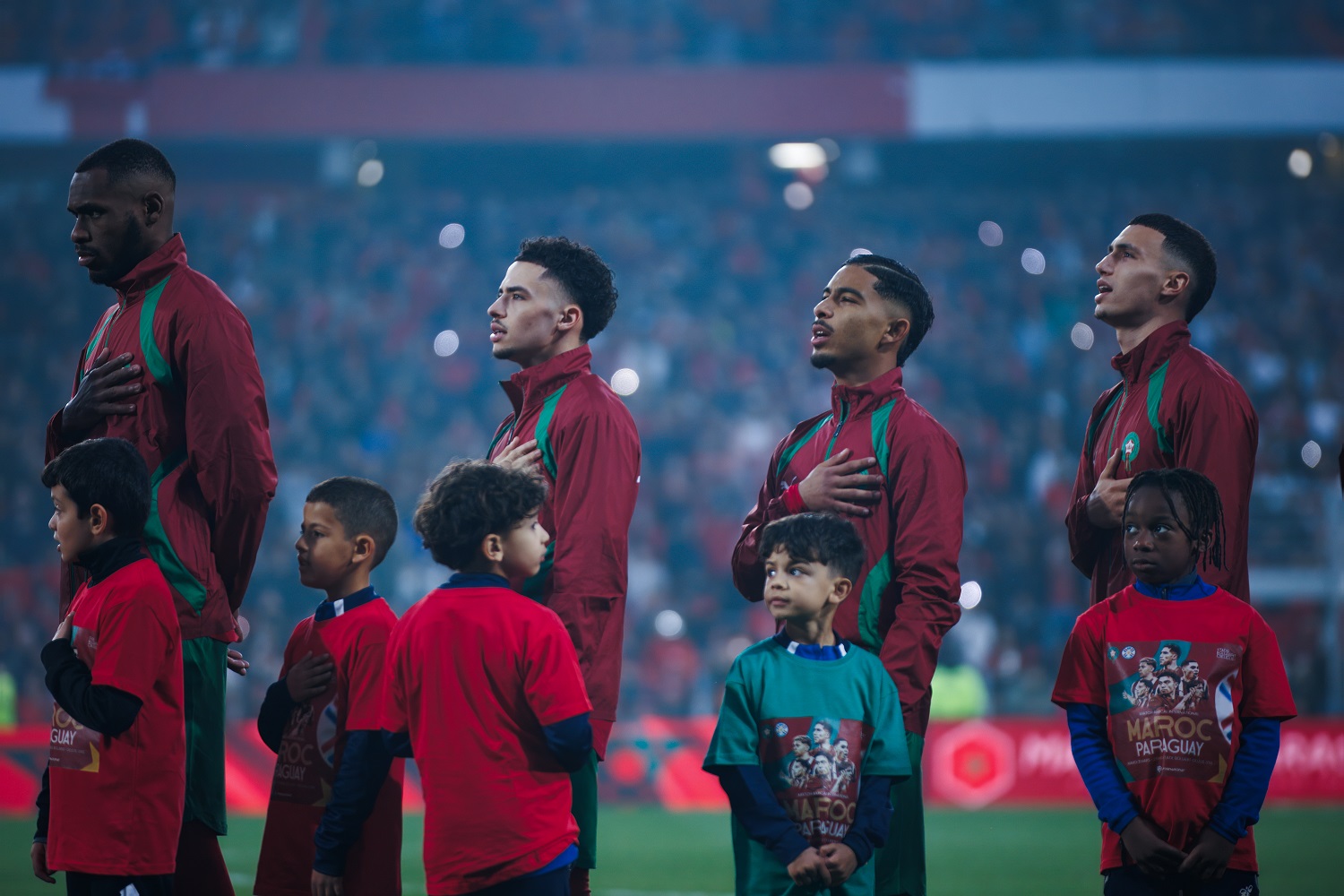
While Donald Trump’s ICE deportations and anti-immigrant policies dominate public discourse in the USA – one of the FIFA 2026 World Cup co-hosts – the tournament itself includes more foreign-born players than any previous edition.
New York in the Target of ICE
Tom Homan, the Trump administration’s border czar, has threatened to flood New York City with ICE agents, in what may be the largest single-city crackdown since the White House scaled back major operations following the disastrous Minneapolis surge in January, which killed two Americans.
The warning comes as New York City prepares for a large influx of visitors for the World Cup in coming weeks.
Democratic New York City Mayor Zohran Mamdani, who earlier looked to have an unexpected connection with Donald Trump, strongly opposed the anticipated ICE increase.
“We will not allow ICE or anyone else to sow fear in our communities — especially at this moment,” Mamdani wrote in a statement on X. “As the world comes to our city, we will stand proudly with our immigrant neighbors and reject these attacks for what they are: an attempt to divide us.”
“Soccer would not exist without immigrants,” Mamdani, himself an immigrant to the U.S. from Uganda, added. “Immigrants play and coach the game, work in the stadiums, fill the stands, and make celebrations like the World Cup possible. Six of the players on the US Men’s National Team are immigrants.”
Immigration agents can still arrest immigrants in detention in New York facilities after they’ve been found guilty and served their sentence, according to state officials. Tom Homan said the surge was in response to a package of New York reforms limiting police and local government cooperation with federal immigration agents.
In May, Gov. Kathy Hochul signed onto a series of reforms limiting police cooperation with ICE, banning masked agents and prohibiting local governments from incentivizing new immigration detention centers.
Federal immigration agents have already been active in New York City, and they caused controversy throughout last year as they made violent arrests inside immigration courts and held immigrants in poor conditions at a makeshift detention center on the 10th floor of a Manhattan skyscraper.
Since the start of the Mundial, several international squads arriving in the United States have faced unprecedented, heavy-handed security measures that critics argue treat world-class athletes like criminals.
For instance, hours before their opening match against Saudi Arabia, the Uruguayan squad was subjected to a thorough roadside security sweep. Luggage was inspected on the pavement right outside their bus, and police sniffer dogs aggressively checked the players. Both Uzbekistan and the Senegal squad faced incredibly lengthy, intrusive airport security screenings upon their arrivals in New York.
According to a Channel 4 News report, the 2026 World Cup has faced serious entry and visa chaos in the United States. The most high-profile person denied entry was Omar Abdulkadir Artan, a Somali referee who was denied entry at Miami International Airport and will therefore be unable to officiate any matches at the tournament.
In the Current World Cup Record Players Represent a Different Country Than the One They Were Born In
In the midst of ICE raids and anti-immigrant rhetoric, it is particularly stunning to see players from a World Cup-qualifying national team publicly stating their refugee and immigrant backgrounds. The Australian national team, for example, delivered the exact opposite message in a video published prior to the World Cup:
The players, one by one, discussed their refugee and immigrant histories, demonstrating that multiculturalism is essential to modern Australian soccer.
The Professional Footballers’ Association (PFA) CEO Beau Busch says the ‘Socceroos’ (a well-known nickname of the Australian national eleven) “highlight the profound impact of multiculturalism” on the country. “At a time when some are trying to divide us and question who belongs here, the Socceroos are a powerful reminder of who we truly are as a nation and as Australians,” he told the Guardian.
Nestroy Irankunda, who was born to Burundian parents in a Tanzanian refugee camp, scored Australia’s opening goal, and his celebration linked the Socceroos’ history and future.
This collection contains various stories comparable to Irakundá’s. Awer Mabil, for example, states in the video: “I was born in Kenya’s Kakuma refugee camp. My parents are from South Sudan. Mo Touré was born in Guinea to Liberian refugees and eventually relocated to Adelaide as a refugee. Milos Degenek escaped Croatia at the age of one and a half to escape the war; he spent his childhood as a refugee in Serbia before moving to Sydney when he was six.
Despite the increasingly polarized political arguments surrounding immigration, around one-third of the US football squad is made up of immigrants’ descendants.
Timothy Weah’s parents immigrated from Liberia and Jamaica, met in the United States, and reared their children in Brooklyn. Ricardo Pepi’s parents relocated from Mexico to Texas in quest of better opportunities. Folarin Balogun, born in New York City to Nigerian parents and raised in England, is the star goal scorer.
Their donations come at a time when Trump has stepped up his attempts to increase deportations and restrict immigration during his second term.
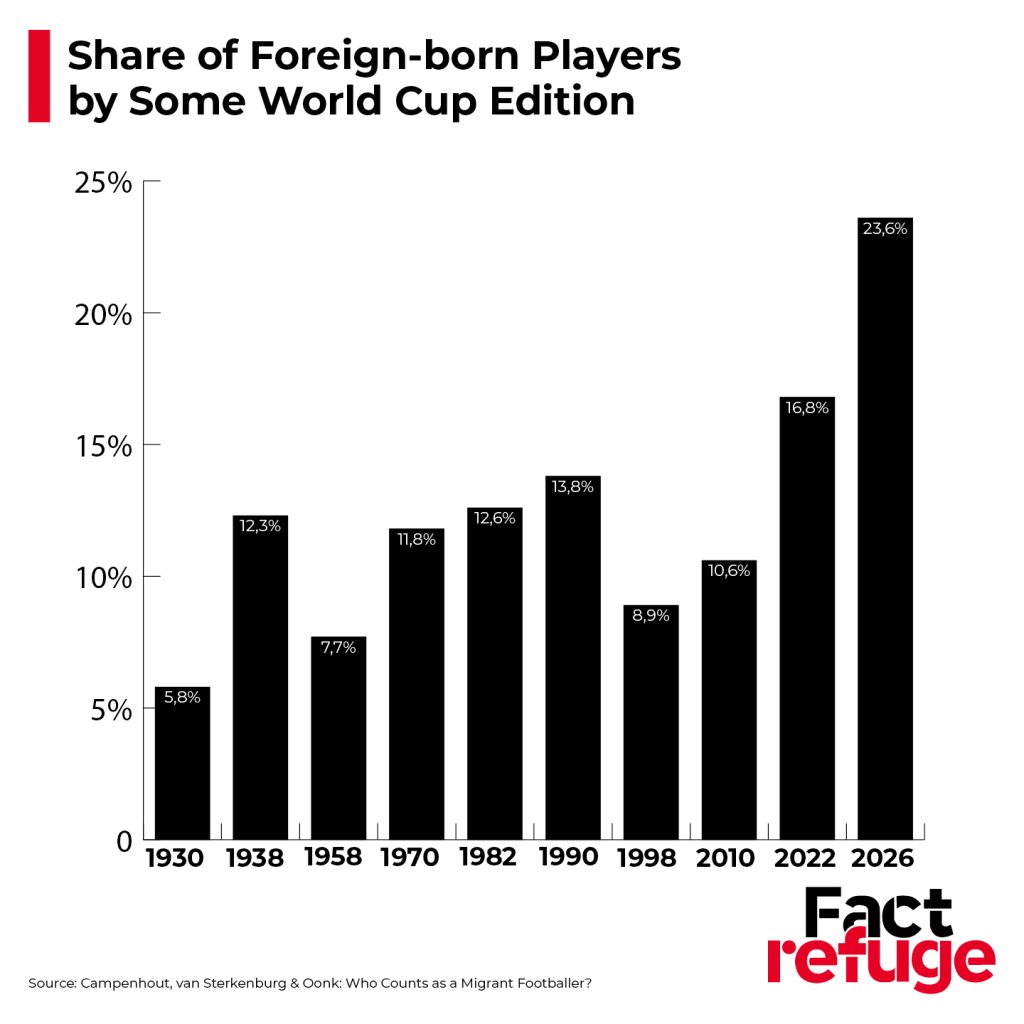
Migration has been a feature of the World Cup’s history since its start. At the tournament’s third edition in 1938, for example, 12 percent of the players represented a country other than their own.
The 2026 World Cup has more foreign-born players than any prior edition. Nearly one-quarter of the 1,248 players chosen for national teams were born in a different country than the one they will represent.
Some squads have much higher numbers than this: 96 percent of Curaçao’s players were born abroad, as were 85 percent of the Democratic Republic of the Congo’s and 73 percent of Morocco’s. Overall, foreign-born players account for the majority of footballers in eight of the tournament’s 48 sides.
Lamine Yamal, Kylian Mbappe, Jamal Musiala, and Bukayo Saka are some of the most well-known faces of modern football and members of multicultural society. Their development has coincided with the current period of globalisation and migration.
Football, as a Glue
In Europe, many organisations work to engage new arrivals through football, writes the UN Migration Agency, the UNHCR. From local NGOs such as the British Red Cross (UK) and Balon Mundial (Italy) to football clubs like Koblenz (Germany) and Middlesbrough (UK), football has played a powerful role in integration and providing opportunities for refugees.
The refugees’ football team of A.S.D. Balon Mundial, Senza Frontiere Football Club (it used to be called “Hearts of Eagle”). This is a football team formed by refugees and asylum-seekers that practices all year and during the summer participates in “Balon Mundial – the World Cup of Migrant Communities”.
Initiatives across Europe and globally actively leverage this dynamic. For example, organizations like the European football governing body, the UEFA has its own ‘Foundation for Children’ which support grassroots networks that actively integrate refugees through intercultural team building and non-formal education. Similarly, local NGOs like Dragones de Lavapiés in Spain use the sport to introduce migrants to the community and assist with navigating daily life and administrative paperwork.
The slogan of the Federation of Association Football (FIFA) “Football for Everyone” is also a philosophy that does not refer to a single project but rather to the International’s comprehensive, global efforts toward inclusion.
According to them, the organization’s goal is to make soccer accessible to everyone, regardless of gender, age, ethnicity, or physical ability.
FIFA aids in immigration and refugee integration primarily through the FIFA Foundation, which partners with organizations like the UNHCR to provide safe spaces, psychosocial support, and life skills education for displaced youth.
FIFA’s integration programs use the universal language of football to help newcomers adapt to new societies with psychosocial support, life skills & career development, and community building. And last but not least, the football governing body is also promoting diversity.
Initiatives such as the H.O.P.E. project in Europe combine sport with language learning, schooling, and job coaching.
