
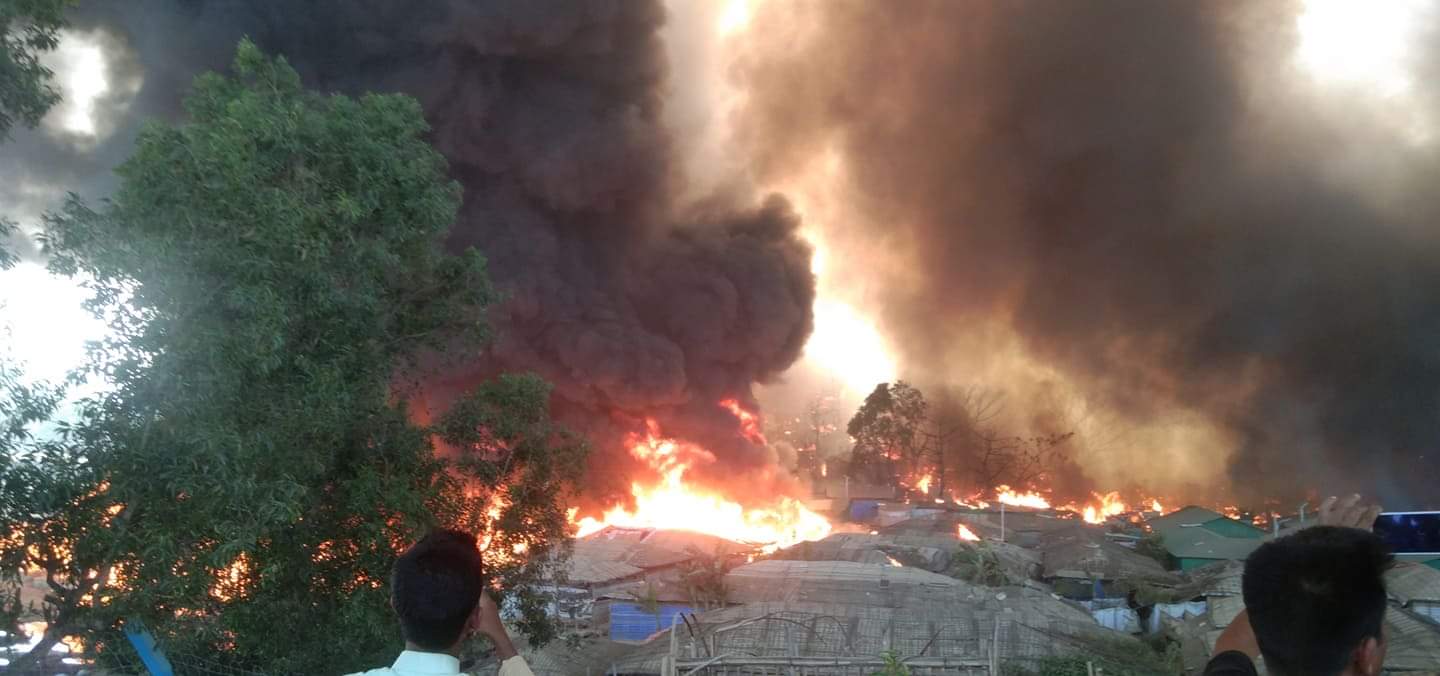
A tragic fire in Cox’s Bazar has displaced over 2,000 Rohingya refugees, underlining the critical need for safer shelter and immediate help.
The International Organisation for Migration of the United Nations stated that it had created a fresh crisis for families who were already fighting to live.
“When fires strike overcrowded camp settings, the impact extends far beyond damaged infrastructure,” said Lance Bonneau, IOM Chief of Mission in Bangladesh, in a statement. “Families lose shelter, essential belongings, and access to basic services, increasing immediate protection risks.”
It took firemen roughly three hours to put the fire under control. The Norwegian Refugee Council said that many people lost their homes and goods, including identity certificates and critical papers, despite no fatalities or serious injuries. The charity organisation is among those functioning within the Cox’s Bazar camps.
The fire, the origin of which has yet to be identified, destroyed 335 shelters and damaged 72 more, according to the organisation. It also caused damage to the camp’s water and sanitation facilities, 11 learning centres, and infrastructure and routes.More than 700,000 Rohingya fled Myanmar in 2017 as the military started a harsh crackdown on the Muslim minority group following rebel attacks on guard posts in Rakhine state, which borders Bangladesh, adding to the number of refugees already in Cox’s Bazar.
The scale, organisation, and intensity of the Myanmar military campaign prompted charges of ethnic cleansing and genocide from the international community, including the United Nations.
The International Court of Justice in The Hague, Netherlands, is now hearing a case charging Myanmar with breaking the 1948 Genocide Convention during its so-called “clearance operation” in 2017. Myanmar has disputed the charges.
The ongoing fighting in Rakhine between government forces and factions opposed to the military authorities who deposed democratically elected Aung San Suu Kyi in February 2021 has forced tens of thousands of Rohingya to migrate to Bangladesh.
Following the fire, the IOM, Norwegian Refugee Council, and other organisations initiated assistance efforts to offer immediate aid to people displaced, such as blankets, mosquito nets, cooking supplies, hygiene kits, and solar lighting.
“While immediate assistance continues, the incident underscores the persistent fire risks facing refugee communities in Cox’s Bazar,” the World Health Organisation stated.
According to the Norwegian Refugee Council, there were plans to build 50,000 semi-permanent shelters to replace the tarpaulin or plastic-covered bamboo structures in which most refugees dwell, but international aid cuts announced in January 2025 forced them to be delayed.
The bamboo structures, which were designed to last just six to twelve months, are packed together in close proximity in the overcrowded camps and are especially vulnerable to fire, according to the organisation.
According to one report, there were 2,425 fires in the camps between May 2018 and December 2025, harming more than 100,000 people and damaging over 20,000 shelters, resulting in severe loss of life.

The decision by US President Donald Trump last year to cut more than 90% of the United States Agency for International Development’s foreign aid contracts and $60 billion in overall assistance around the world, combined with cuts to international aid from several European countries, has resulted in a dire shortage of humanitarian aid funding around the world, including in Cox’s Bazar.
According to the Norwegian Refugee Council, just around half of the cash required for the Rohingya response will be collected in 2025, leaving a $466.6 million financial shortfall.
“Funding needs to be increased urgently so that we can resume construction of the 50,000 approved semi-permanent shelters,” stated the organisation, which has already begun assisting in the construction of new temporary dwellings in the aftermath of the fire.”Without immediate action, fires like this one in Camp 16 in Cox’s Bazar, will continue to threaten lives and force families to rebuild from nothing again and again.”
The organisation stated that other needs include emergency food assistance, warm clothing, the restoration of water and sanitation facilities, and basic household necessities.
The Genocide Against the Rohingya
The Rohingya genocide is a series of continuous persecutions and killings of Muslim Rohingyas by Myanmar’s Tatmadaw (military forces). To date, the genocide has been divided into two phases: the first was a military crackdown that lasted from October 2016 to January 2017, and the second began in August 2017. Since 2024, the Arakan Army has also been accused of indulging in abuses against the public, particularly in areas under its authority. The turmoil led more than a million Rohingya to escape to neighbouring countries. The majority fled to Bangladesh, culminating in the construction of the world’s largest refugee camp.
The persecution of Rohingya Muslims in Myanmar dates back to at least the 1970s. Since then, the Rohingya people have been persecuted on a regular basis by the government and Buddhist nationalists.
