
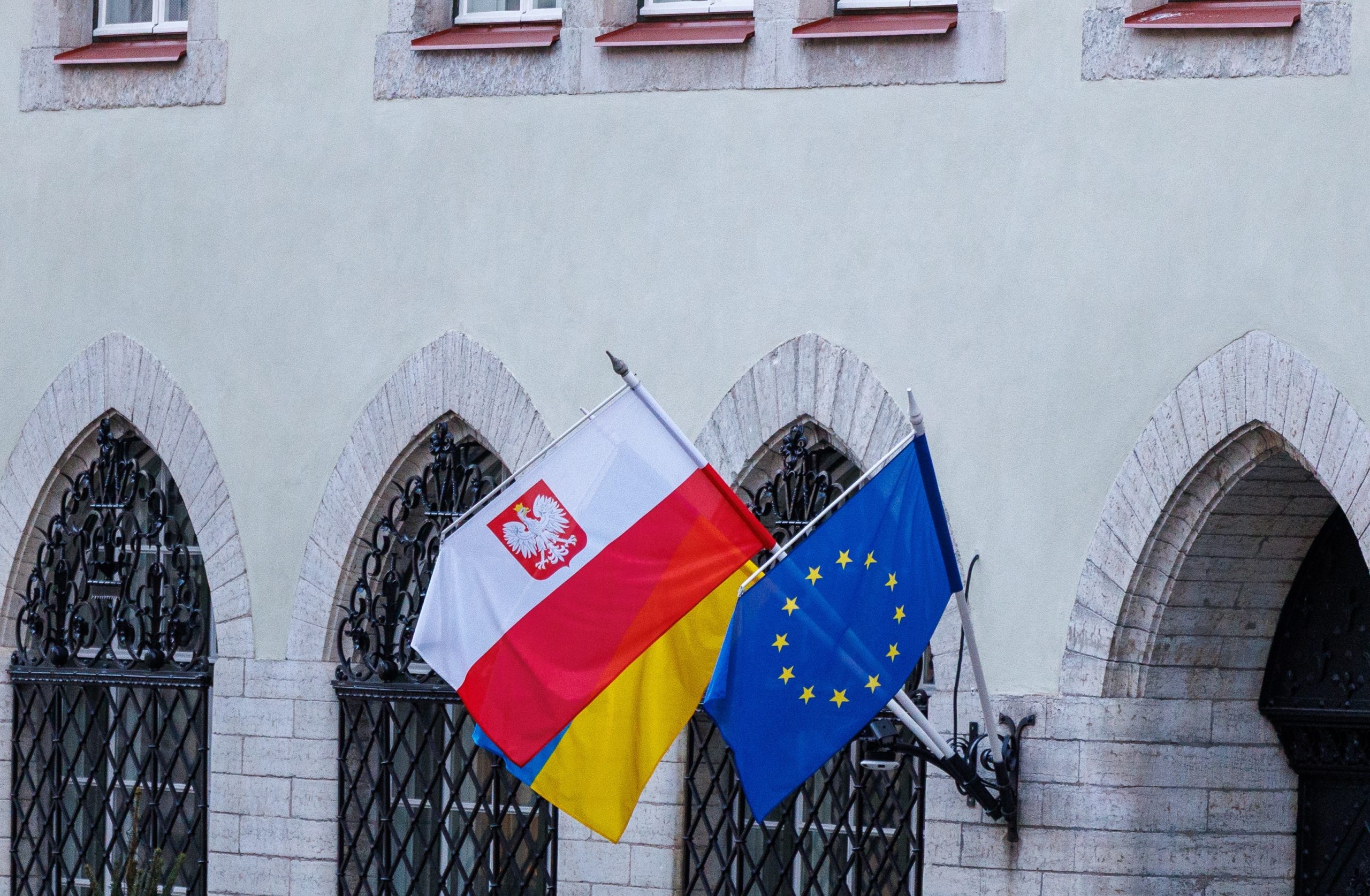
In Poland, the number of residence permit applications leaves the system so clogged that many immigrants must wait years for an answer. Simultaneously, the country is experiencing increasing anti-migrant sentiment, despite experts warning that without the incoming workforce, the economy will suffer significantly.
Slow Immigration System Leaves Thousands in Limbo
In 2022, millions of Ukrainians flooded into Ukraine as war refugees after Russia started its full-scale invasion. In April, the government suspended deadlines concerning certain residence permits along with the usual legal consequences of administrative delays.
But this clause, Article 100d of the Special Act Assistance to Ukrainian Citizens, applies to foreigners of every nationality. Originally an emergency law, its run continues, currently until March 4, 2027, obstructing hundreds of thousands of foreigners in receiving their residence permits and corresponding rights.
Many times, a pending application is insufficient for immigrants to access basic services, including banking, leaving many to pay taxes and bills in cash at post offices. Others are allowed to remain with a pending application, but leaving the country might mean they cannot return.
“Since my EU Blue Card expired in February 2026, my life has been on hold,” Nikati, a Turkish software engineer in Gdansk, told Balkan Investigative Reporting Network (BIRN), a network of non-governmental organizations across Southern and Eastern Europe. “I cannot travel abroad for client business, visit my family, or make standard cross-border financial transactions.”
Foreigners now make significant contributions to Polish society: according to Balkan Insight’s analysis, they make up 6.2 percent of annual pension contributions with 21.5 billion zloty (5.5 billion euros).
Under the original legislation, a formal challenge is possible, but Article 100d suspended this route as well.
The Situation in Voivodeship Offices
Poland’s voivodeship offices, the regional state administrative offices responsible for immigration documentation, say their workers are doing their best to handle the situation.
In the first half of 2026, they granted 190,900 temporary residence permits; a record number at a record pace, according to data from the Office for Foreigners compiled by Glos Migranta (Migrant’s Voice), a civic initiative of foreigners in Poland.
Other types of residence permits have also been high: Eurostat data shows that in 2025, Poland awarded the third-most first residence permits in the EU, only outdone by Germany and Spain.
However, the number of permits issued have been on an ongoing decline since 2021. According to independent English-language news outlet Notes from Poland, if the number is put in relative terms, Poland is ranked only ninth in the EU, with 12.8 permits per 1,000 people.
Yet, in terms of all residence permits in 2025, Poland was ranked sixth with 1 055 532 and was only preceded by historically large immigration hubs like Germany, France, Spain, Portugal, and Italy. This suggests that despite the decline in first residence permits, the workload is still significant for voivodeship offices.
According to Balkan Insight, average processing times for temporary residence permits, once the procedural requirements are met, range from 242 days in Malopolska to 658 in Silesia; the original law allowed only a 60-day decision period. The Mazovian Voivodeship Office spokesperson Luiza Jurgiel-Zyla told BIRN in a written response that its foreigners’ department handles more than 200,000 cases, with an estimated workload of over 3,500 per employee.
She added that the great number of inquiries and complaints only add to the workload. “Complaints filed with the administrative court require staff to prepare responses, gather documents, correspond with the court, and carry out tasks arising from its rulings. The same staff are also responsible for processing residence permit applications.”
Marcin Kusy, director of its Migrants’ Rights Team at the Ombudsman’s Office, confirmed the phenomenon but added that his office remains dissatisfied. “The Ministry understands the problem and its causes, but in our view, it is not doing enough to resolve it.”
Public information requests are met with similar responses: Glos Migranta sought data on immigration proceedings from the Lublin voivodeship, who responded by calling repeated requests a “harassment of the authority.”
Poland’s Need for Immigration
Experts warn the Polish economy needs immigrants to aid its demographic hardships, despite immigration’s high salience in the country. “Fewer workers mean slower growth and less tax coming in, while an older population costs more in pensions and health,” said Marcin Tomaszewski of the European Bank for Reconstruction and Development.
Incentivizing families previously backfired, as mothers quitting the workforce to raise children outpaced worker replacement rates, according to a recent OECD study. As Poland’s national broadcaster TVP put it, “a baby boom beginning tomorrow supplies schoolchildren first, and Poland needs workers now.”
But anti-immigration sentiment makes improving the lives of migrants a difficult political choice.
“We are just a tool in this big game,” says Vladimir Medvedev, co-founder of Glos Migranta. “Some politicians are for us, some are against us, and they play with that to get more votes.”
Additionally, most of those affected have very limited room to have their voices heard without danger.
“One of the biggest obstacles was psychological,” Medvedev added. “For people who come from countries where protesting can be physically and legally dangerous, taking to the streets is not an easy decision.”
Stuck in the Crossfire
Though immigration remains controversial in Polish politics, Medvedev says organizational failure is to blame, not deliberate discrimination. He worries that the psychological toll leaves immigrants’ loyalty worn out and erodes trust in democracy.
“Many people fled dictatorships and came to Poland specifically because it is a democratic European country where human rights should be respected. But in reality, we are facing systemic discrimination at the state level.”
“We are fighting this failure using legal, democratic tools. We want to fix and improve a system we believe in, not tear it down,” he added.
