
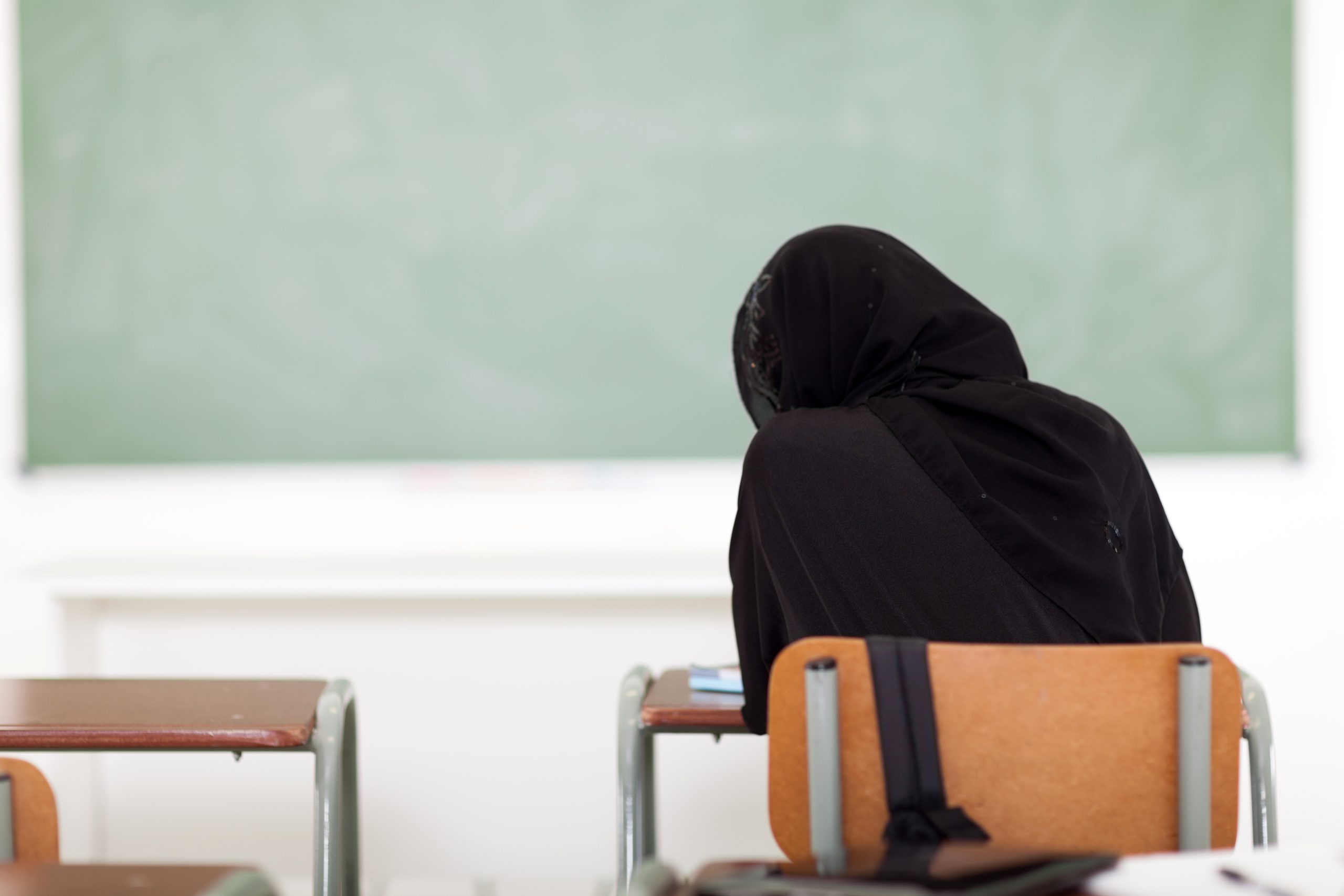
The Italian government approved a bill last week limiting the number of pupils without Italian citizenship or poor knowledge of the Italian language to 30% in any one class. It also includes a ban on wearing a burqa or niqab in schools. Though the bill is yet to pass in parliament, last week’s approval put it in immediate effect.
Prime Minister Georgia Meloni described the measures of her conservative cabinet as “common-sense tools that do not divide but really help to integrate,” adding that this will lead to all students receiving the same opportunities.
Opposition has called the measure catering to hard-right Futuro Nazionale party sympathizers on the right flank of her own coalition ahead of the general election next year, many denouncing the rules as a “witch hunt.”
What the Bill Includes
The bill requires a per-classroom cap of 30% for foreign students who lack Italian language proficiency.
In primary schools, the limit applies to students who are not Italian citizens, were not born in Italy, or did not attend at least two years of preschool. In lower and upper secondary schools, the limit applies to students without citizenship who did not attend the Italian school system for at least three years.
Failure to comply is punishable by a fine of up to €1,000.
The bill also bans burqas and niqabs in all schools but continues to allow hijabs. A burka is a one-piece veil, covering the full body, often with mesh around the eyes to see through. The niqab is a face veil that leaves the area around the eyes clear. It is worn with an accompanying headscarf to cover the head and sometimes a separate eye veil. The hijab covers the head and hair but leaves the face completely visible.
“When a woman — or worse, a young girl — is forced to cover her face, she is being denied fundamental rights and the very integration that is so often loudly championed,” Meloni was quoted in a television interview. In connection with the bill, she stated that the ban was “a matter of security.”
On approval, the measures will take immediate effect, though the bill will require parliamentary approval within 60 days, where Meloni’s coalition currently holds majority. The law also built on a 2010 ministerial notice under then-Education Minister Mariastella Gelmini, which introduced the 30% limit “as a rule” but was not enforced.
Italy’s Ansa news agency reported that a draft even involved parents; schools would have been required to report cases where persistent language barriers hindered a child’s integration, with free Italian courses to be offered to improve the situation. If that failed, the child would have been placed outside of the family home. The approved bill does not include these measures.
Critics Say Measures Are Unnecessary
According to German news outlet Deutsche Welle, nearly 12% of students across Italy are classed as foreign. Most are second-generation immigrants and multilingual; most have no trouble speaking fluent Italian. Only 11.2% of students lacked citizenship from 2022 to 2023. The percentage of classes with over 30% foreigners was estimated to be a total of 7.6% .
Many point out that Meloni is not concerned with education: Roberto D’Alimonte, Professor of Political Science at Luiss University, argues the language issue is a regional problem, mostly in the north, where most of the children in classes speak Italian as a foreign language, slowing down the development of native Italians. Yet, he says other ways would be more effective.
Sarah Silvestri, a senior lecturer in International Relations at St. George’s University of London, told Deutsche Welle that spending more on the education system would lead to lowering class sizes and attracting more foreign language teachers to bridge these gaps. Meanwhile, wearing burkas and niqabs is not a common occurrence in schools, and she sees it as essentially a non-issue.
Hard-Right Vote Worries
Roberto Vannacci, a retired military general, leads the hard-right Futuro Nazionale Party, which has often been described as extremist. The party threatens to pull some of Meloni’s far-right coalition, already polling at 8 percent, taking voters from other right-wingers, including Meloni’s Brothers of Italy Party.
The deputy leader of the center-left Democratic Party (PD) and chamber vice-president Anna Ascani, as well as PD leader Elly Schlein, both called the new measure propaganda, with Schlein having gone so far as to say it was “a new witch hunt at the expense of children.”
Education Minister Giuseppe Valditara said the limit is “purely linguistic” and aimed to avoid “ghetto classes,” while the banning of niqabs and burqas was a matter of gender equality.
But experts warn that the Vannacci factor is a much more pressing reason behind the policy; with more expected to come as Meloni gears up for next year’s elections.