
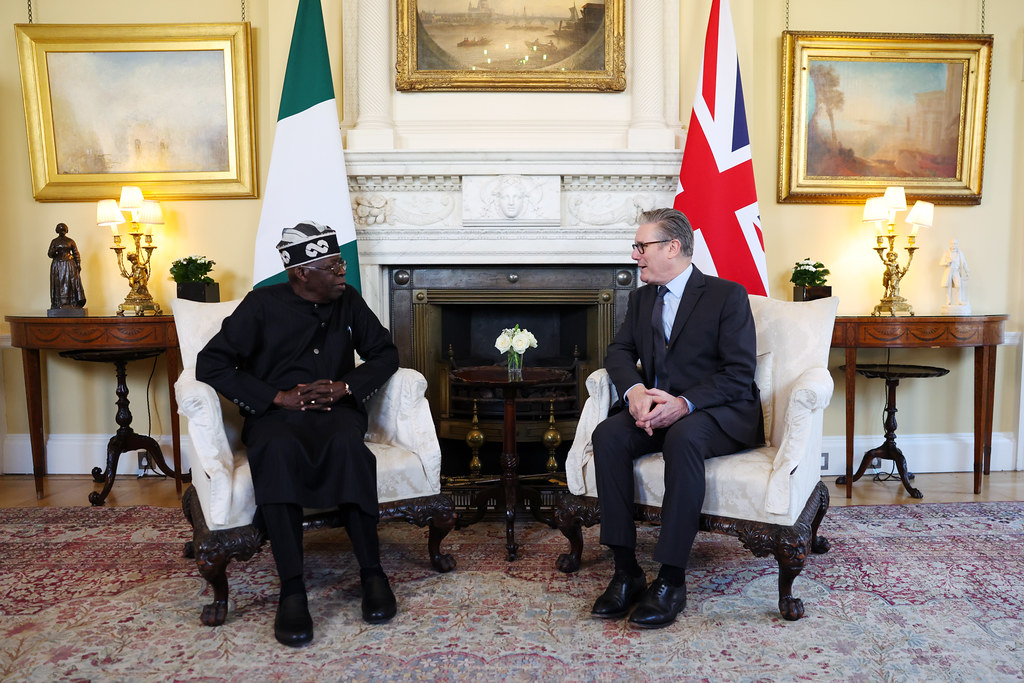
Last week, British Prime Minister Keir Starmer and Nigerian President Bola Ahmed Tinubu agreed on the latest migration deal to speed up removals from the UK during the Nigerian leader’s state visit – the first in 37 years.
A Historic Visit
The Nigerian President and First Lady Oluremi Tinubu received a state banquet from King Charles III as it was the first Nigerian state visit in the UK in decades. Tinubu is also a Muslim, making him the first Muslim leader to visit the UK during Ramadan.
The two countries share strong ties, with over 270,000 Nigerian-born people living in the UK. “Nigeria is a key partner in our work to tackle illegal migration, as the UK’s largest African visa market and home to thousands of Nigerians who have built their lives here,” added Border Security and Asylum Minister Alex Norris.
Meeting the Prime Minister at Number 10, the focus was on a mutual commitment “to deepening their long-term partnership on trade, infrastructure, and sustainable growth,” according to a Downing Street spokesperson.
Historic Changes to Speed Up Deportation
The two leaders conversed on many issues, including migration – a top priority for Starmer’s government.
Nigeria has agreed to recognize UK letters, which identify individuals without valid passports. Beforehand, the UK had to wait for Nigeria to issue emergency documents for these deportees; this agreement removes a major bureaucratic hurdle to speedy deportations.
A new standardized document-checking system will be introduced to verify document authenticity used in applications.
The Home Office emphasized that the deal would enable the return of foreign criminals, those who overstay their visas, and rejected asylum seekers. This improvement is much needed, as government data indicates 961 Nigerians can no longer appeal for asylum in the UK, and there are more than 1,100 Nigerian offenders still awaiting deportation.
The Home Office said annual returns to Nigeria had nearly doubled to 1,150.
The sharing of information and joint operations aims to crack down on criminal gangs that abuse visa routes to the UK. While the Home Office is hunting down fake job sponsorships and marriages, as well as forged employment records, Nigeria has vowed to toughen laws to increase sentences for immigration offenses.
The agreement on defense and security cooperation will tackle transnational crime and terrorism as well – an important point for both sides after a series of bomb explosions, potentially suicide bombings, shook Borno state, killing 23 and injuring over a hundred people. No group claimed responsibility, but the area has been the home of the Boko Haram, a local jihadist insurgent group.
Migration Just One Among Other Agreements
Besides cooperation on migration, the two countries strengthened ties in other areas as well, including a £746 million deal for the UK to fund the redevelopment of Nigeria’s major trading ports, with at least £236 million of supplier contracts going to British companies. The Home Office hailed the deal for creating thousands of jobs in Nigeria for UK citizens.
While Nigerian jobs may not be created directly by the deal, analysts have argued that the combination of improved ports and streamlined visa processes will make the country a more attractive business destination, especially for British partners.
Many have criticized the migration deal for forcing foreigners into a third country they may never have known, viewing it as an infringement of human rights. However, the deal does not cover non-Nigerian citizens, as emphasized by Senior Special Assistant to the President on Media and Publicity, Temitope Ajayi. “The UK government is not compelling Nigeria to take those who are not our citizens,” he said in a statement.
Many critics question whether such deals are effective in the first place, especially after three other African states – Angola, Namibia, and the Democratic Republic of Congo (DRC) – refused the return of their citizens then caving to UK demands after UK Home Secretary Shabana Mahmood threatened them with visa penalties.
Currently, the effectiveness of the Nigeria deal will depend on how quickly it is implemented, as its start date and duration remain unknown.