
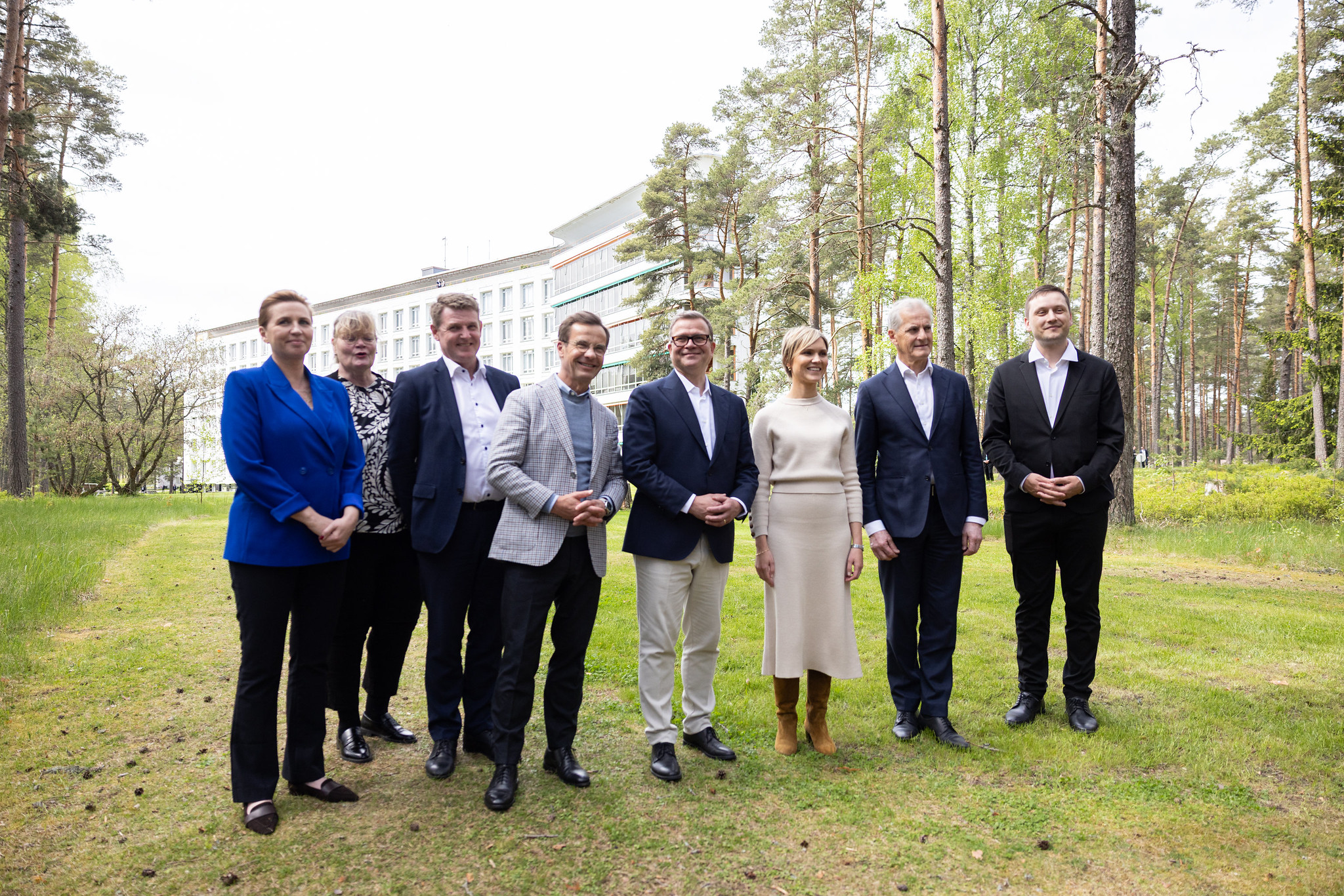
Immigration has increased greatly in the Nordic countries overall, with the OECD’s report on the region estimating it rose 50% in the last decade. What integration efforts have these states made, and were they effective?
Nordic States: Where Integration Fills Gaps
The Nordic region, consisting of Finland, Sweden, Norway, Denmark, and Iceland, hosted 4.4 million immigrants in 2023. For Sweden and Norway, migration coming in from outside the EU was most significant, through family reunification and asylum, while for the rest of the region, EU immigrants led arrivals through the free movement opportunity of the EU/EEA.
The migrants arriving are usually much younger than the native population: two-thirds are of working age (25-54), in contrast with only one-third of the native population, according to the OECD’s recent ‘State of Immigrant Integration’ report, which examines 2023 data. Migrant workers have become an important pillar in keeping up the welfare state while native populations age.
To support this model, each country already offers extensive integration programs with great success.
Language Programs are Especially Popular
Language training is a very important pillar of integration: each state has invested in such programs (formal and informal alike) for years. Participation rates are especially high for non-EU immigrants and much higher in each country than the EU average of 55%. In Denmark (86%) and Finland (81%), where participation is highest, there is a formal requirement linked to claiming social benefits. But participation was also high in Norway (79%) and Sweden (70%), neither of which makes the training mandatory; in Sweden, courses are even free and available to all immigrants, while Denmark funds a maximum of 15 hours per week.
EU migrants, however, have restricted access to such programs, contributing to their lower participation rates. Again, Sweden recording a low participation rate is proof that there is a more complex reason behind this statistic. Many times, EU migrants stay for shorter periods and frequently have little need for national languages in the workplace, relying on English instead.
Despite this, one in three migrants who arrived with beginner’s knowledge of the national tongue speak at an advanced level or higher after at least five years in the country.
Sweden specifically encourages participation early in the integration process, combining traditional language learning with practical activities. There are also profession-specific language courses, for example, for academics, engineers, healthcare workers, and drivers.
High Degree Recognition and Employment Rate
Employment rates were also high in each Nordic state: EU-born immigrants tend to have a higher employment rate than the native-born population. In 2023, Iceland led with 87%, followed closely by Sweden at 83% and Norway at 80%. Denmark (79%) and Finland (76%) had an overall lower employment rate, which affected native-born figures as well.
But non-EU immigrants were much lower, by as much as 13%. This is attributed to the high skill level demanded by Scandinavian labor markets, which humanitarian migrants find difficult to adjust to. Iceland still led with an 80% rate. In the other states, the difference was much starker: 68% in Denmark, 67% in Sweden and Norway, and 65% in Finland.
However, immigrants remained more likely to be unemployed. The foreign-born are also more likely to experience long-term unemployment, surviving without a job for over 12 months. Sweden observed an especially large gap in long-term unemployment, where 12% of the native-born population experienced such a phenomenon, compared to 32% of immigrants.
The immigrants in the Nordic region are also highly educated; over one in three hold a tertiary education (well above the EU average), increasing as more immigrants arrive. In fact, the proportion of the population holding a tertiary education is higher among immigrants than it is among native-born.
Each state has extensive recognition frameworks in place, with about half of immigrants utilising them; this is the highest in the EU after Germany (48). Most of those who do not apply say it is unnecessary, as they find employment without degree recognition.
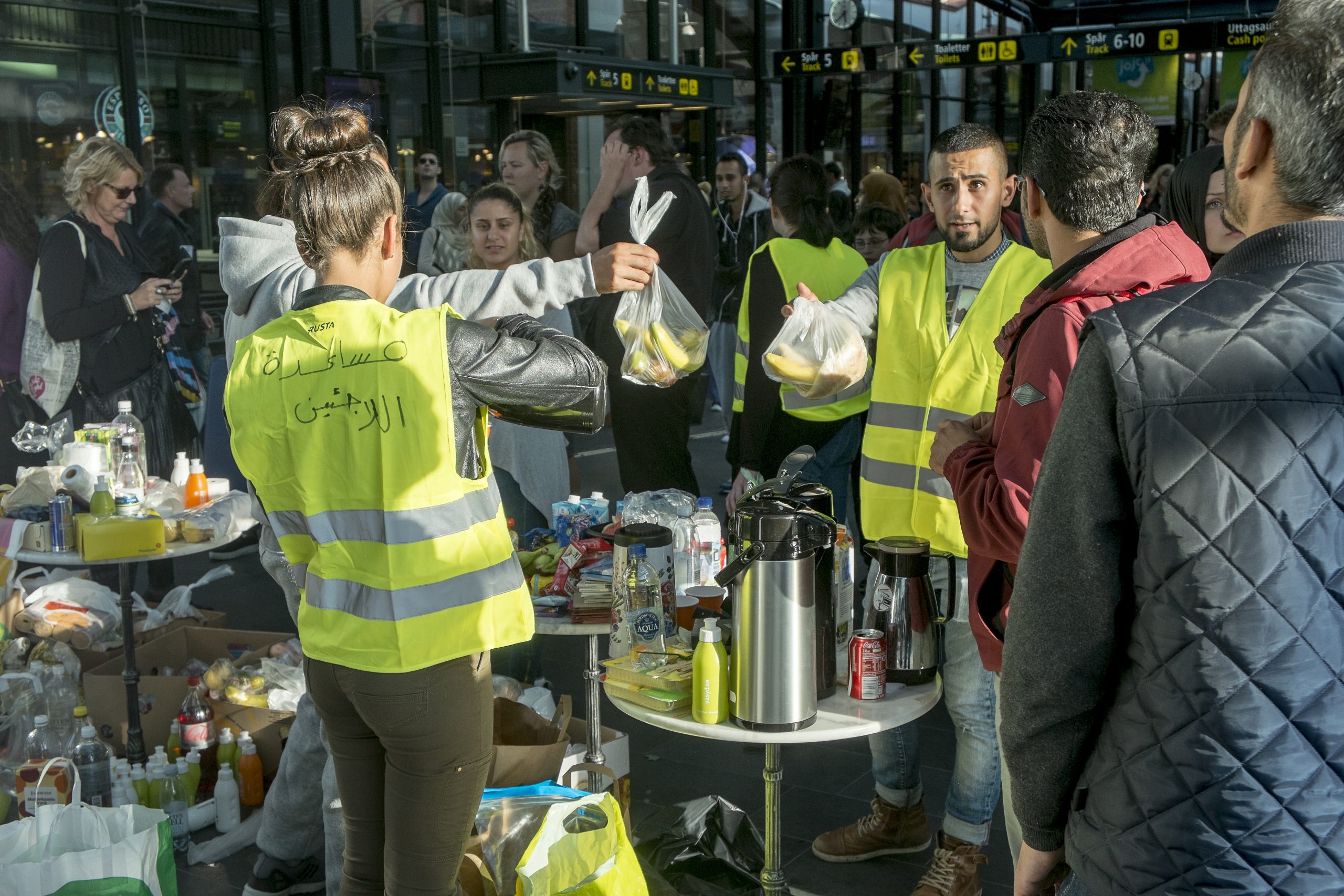
However, those arriving from outside the EU tend to have trouble finding employment fitting their skills and education. In statistics of highly educated individuals working high-skill jobs, the disparity between those coming from outside the EU and those native to the country can be as high as 30% (Norway) or 40% (Iceland).
New Measures in Sweden: Restrictions Increase
As the policy overview compiled by the Nordic Welfare Centre and Nordregio supported by the Nordic Council of Ministers concludes, the North has foregone the rights-based approach in favor of focused measures that encourage “individual responsibility” to participate in society. The states provide opportunities and encourage naturalization, especially through labor market integration and language training.
Despite producing some of the best results in the bloc, each state continues to work on its integration systems to maintain its track record. On the other hand, restrictive measures are also being introduced to decrease numbers as migration becomes increasingly polarizing.
Sweden, the Nordic state that has the highest share of migrants relative to its population, began the year by abolishing permanent residence permits for refugees and those under subsidiary protection and revoking those already granted. The measure has also been extended to those holding long-term EU residency status. The measure aims to encourage applications for Swedish citizenship.
The Swedish government is also tweaking its repatriation programme, “significantly increasing” the grant paid to legally residing third-country nationals (refugees and those under subsidiary protection) volunteering for repatriation. Swedish Migration Minister Johan Forssell stated this is to encourage those “who do not feel sufficiently integrated into Swedish society” to return to their country of origin.
The Swedish capital, Stockholm, has also started a new integration programme involving civil societies, local businesses, and the public sector to help newly arrived migrants settle into the labour force without issues.
The Integration Pact offers meeting places for networking and upskilling opportunities and encourages those already working to partake and share their experiences with those who haven’t yet made the jump.
Challenges Remain
Though Nordic states do better in terms of integration than most European counterparts, there is still work to be done. The skill-employment mismatch must be addressed. While poverty among migrants is generally lower than the EU average, it is still “consistently higher” compared to natives. Discrimination levels remain higher than the EU average, especially among the younger generations who are trying to get into employment. Many struggle to find housing due to this as well.
While the Nordic region is leading the charge EU-wide in migrant integration, it does not mean social changes will not affect these states as well. Integration needs change and requires an answer in time to forego major problems. Meanwhile, other areas of Europe can look to the North as an example.
