
Thousands of Africans continue to try to reach Europe either over the Sahara Desert or by sea, facing inhumane conditions. The EU wants to discourage the trend, but migrants are increasingly flowing, using the so-called “Atlantic Route”.
At the end of August a new report was released by the Human Rights Watch (HWR), revealing the serious migrant rights violation.
In April, 2024 the EU granted €210 million in aid to Mauritania, nearly €60 million of which will be invested in the fight against illegal immigration to Europe.
In 2024, a record 46,843 people arrived by boat in the Spanish archipelago, the Canaries. About 11,500 people arrived between January and July 2025. Over 80 percent of the boats that carried the migrants departed from Mauritania or transited through its waters. In addition, many migrants, mostly from the Central Sahel and the Gulf of Guinea, are picking the city of Nouadhibou in Mauritania’s northwest, making it a migratory crossroads and transit city. Nouadhibou is about 700 kilometers from Spain’s Canary Islands, which gives the city a geostrategic importance for both Spain and the EU.
Mauritania, a Popular Transit Route and Destination for Migrants
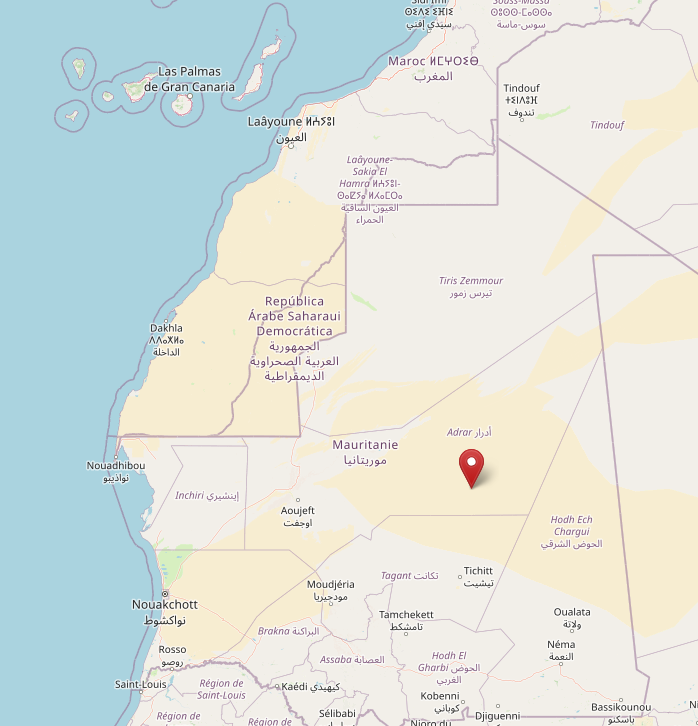
The Atlantic Ocean, Senegal, Mali, Algeria, and the Moroccan-occupied Western Sahara surround Mauritania. This geographical situation makes it a destination and transit country for mainly West and Central African migrants. Mauritania also hosts asylum seekers and refugees, the majority from Mali, where armed conflict and violence have worsened. Mauritania has also long been a destination for West and Central Africans in search of employment. The country currently accommodates approximately 176,000 registered asylum applicants and refugees, with the majority of them hailing from Mali. Some migrants intend to transit Mauritania in order to reach Morocco, Algeria, or the Moroccan-occupied Western Sahara.
According to the HRW report, Mauritanian security forces perpetrated severe human rights violations against primarily West and Central African migrants and asylum seekers from 2020 to early 2025.
The HWR’s report details the abuses committed by the Mauritanian police, coast guard, navy, gendarmerie, and army during border and migration control. These abuses include torture, rape, and other forms of violence; sexual harassment; arbitrary arrests and detention; inhumane detention conditions; racist treatment; extortion and theft; and summary and collective expulsions. Inhumane conditions and treatment were described by dozens of individuals who had been detained in Mauritania’s police-run migrant detention centers. These conditions included a lack of food, poor sanitation, the detention of adolescent children with unrelated adults, and intermittent beatings by guards.
The report also emphasizes the detrimental effects of Mauritania’s interceptions and forced returns of migrant vessels, which are backed by the EU and Spain. Additionally, the search-and-rescue efforts in the Atlantic are still insufficient, which is contributing to the ongoing deaths.
Human Rights Watch asserted that the EU and Spain fostered repression of migration and shared responsibility for abuses in Mauritania by funding, equipping, and collaborating with Mauritanian forces for years to bolster border and migration controls without assuring adequate human rights safeguards. Spanish forces were present in certain instances during the abusive arrests and detention of migrants by Mauritanian authorities. The EU also provided funding for the renovation of two former migrant detention centers, which are scheduled to reopen this year to accommodate migrants who have been intercepted or rescued at sea.
“Mauritania’s recent reforms show that a new approach is possible. The government should build on these efforts, scale up monitoring of security forces, and halt collective expulsions,” says Lauren Seibert, refugee and migrant rights researcher at HRW and main contributor to the report.