
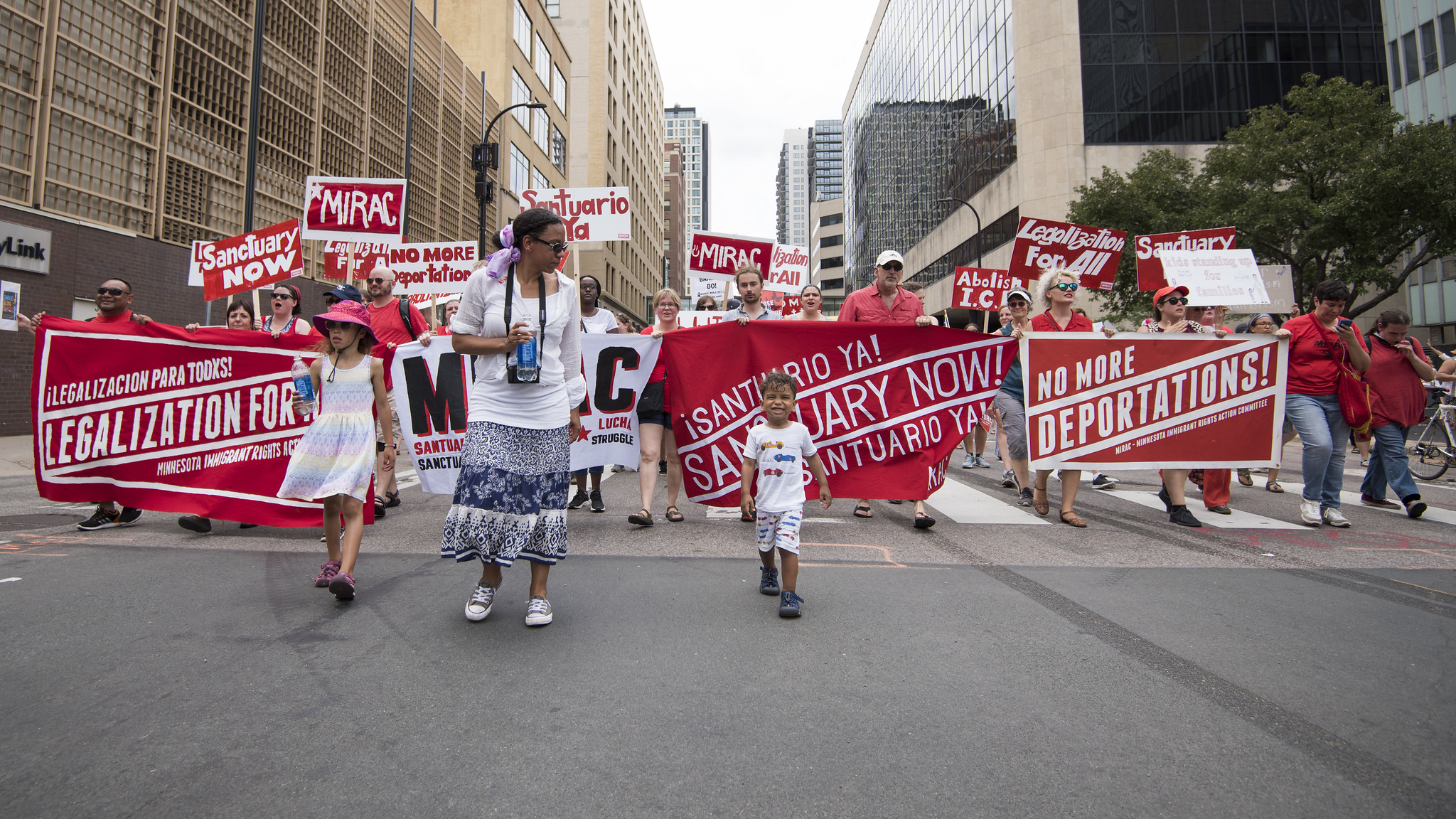
Family separation has become a major issue again in the United States under President Donald Trump’s second administration. However, the way families are being separated in 2026 differs from the controversial border separation policy of 2018.
Children Left Behind After ICE Arrests
On October 20, advocacy organizations in Houston raised concerns about two girls, ages 10 and 11, whose mother was in immigration detention. Federal authorities disputed the organizations’ characterization of the case, saying parents can arrange for their children to leave with them or stay with a designated caregiver.
Under the administration’s mass deportation program, Immigration and Customs Enforcement and Customs and Border Protection (ICE) have carried out coordinated raids and enforcement operations across the country, often with assistance from other federal agencies and local law enforcement partners.
The Trump administration announced plans for government lawyers within the Department of Health and Human Services to represent unaccompanied migrant children.
Immigrant-rights organizations expressed concerns about whether government-employed attorneys could independently defend children when the same administration is responsible for immigration enforcement.
Is the 2018 Policy Returning?
In 2018, the first Trump administration declared it was pursuing a “Zero Tolerance” policy at the southern border. That policy, which forced the separation of undocumented children from their parents when they were taken into custody, sparked an immediate outcry. The administration was compelled to alter course, but not before more than 3,000 children were separated from their families, some of whom were never reunited. It remains one of the darkest chapters in President Trump’s first term.
While in 2018, families were purposely divided at the borders, currently separation follows arrests, detentions, and deportations within U.S. territory. Back then children were kept in separate government custody. Eventually the federal courts intervened to stop most separations.
Now, in 2026, the second Trump administration is again targeting children as it pursues its hardline anti-immigration agenda. According to the Brookings Institution, there are an estimated 205,000 children whose parents have been incarcerated since 20 January 2025.
Newsweek noted that from the abovementioned number of minor migrants, there are around 145,000 who are U.S. citizens. The analysis also indicated that more than 22,000 U.S. citizen children have experienced the incarceration of all co-resident parents.
What Happens Next?
At the beginning of August, the contract between the federal government and the Acacia Center for Justice, a nonprofit legal services provider, lapsed when the administration refused to extend the deal unless the group released sensitive, protected information about its clients. The clients were unaccompanied youngsters in the custody of the Office of Refugee Resettlement (ORR). With the expiration of this contract, more than 20,000 migrant children were left without legal representation.
Three topics are very crucial going toward the end of 2026. A 2023 deal preventing family separations remains crucial, with some protections extending through 203. Changes in federal funding and representation could affect whether unaccompanied children can pursue their immigration claims. Some previously separated families face deadlines in December 2026 to activate legal rights under the deal.
