
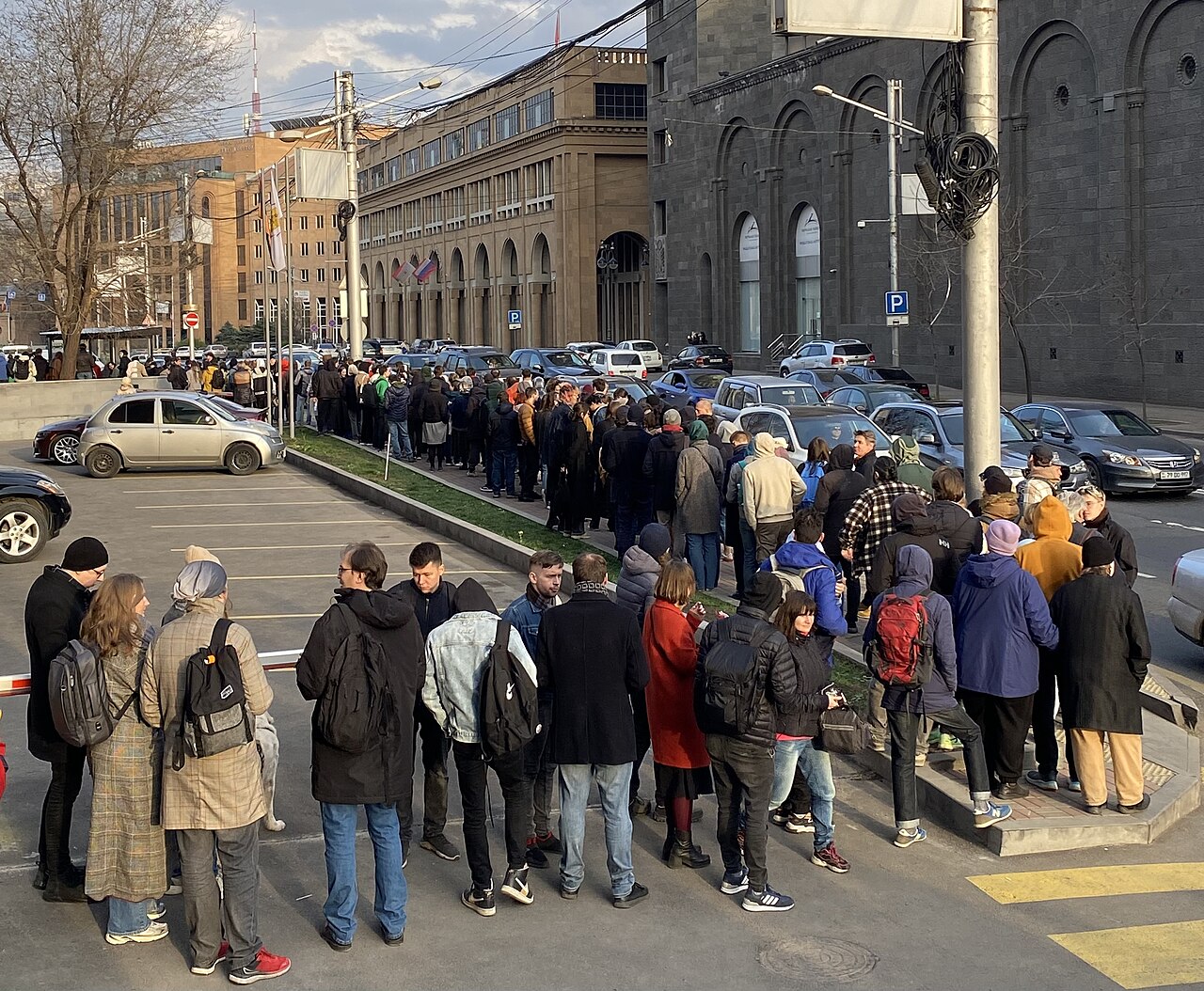
More and more Russian citizens are migrating to Europe, European statistics show. While in some countries their share is dwindling, Southern European EU member states recorded meaningful increase, alongside some states neighboring the European Union, like Serbia and Turkey.
According to an analysis of Eurostat data carried out by European news platform Euronews, the number of Russian citizens living lawfully in the EU has increased by 105,000 since Russia began its full-scale invasion of Ukraine in early 2022. The total number has reached 876,600 by the end of 2025.
Compared to the 771,800 Russians who had valid temporary or permanent residence permits in all EU member states in 2021, this number represents a 13.6% increase. With 218,000 inhabitants, Germany has the largest community, followed by Estonia (78,400) and Spain (116,800).
The largest increase has occurred in Southern Europe: during that time, 44,400 Russian citizens were granted residency permits in Spain, 13,700 in France, and 2.5 and 3.5 times as many in Cyprus and Portugal, respectively.
A number of EU nations have taken the opposite course. Due to strict immigration laws and security concerns over sizable Russian-speaking populations in the Baltic states, Latvia, Estonia, and the Czech Republic have seen the biggest declines in the number of Russian citizens.
Outside the EU, significant communities have also emerged. By the end of 2025, there were 61,900 Russians living in Serbia, up from about 5,000 prior to the invasion. Over 107,000 Russian migrants had been taken in by Kazakhstan by the spring of this year, compared to 43,500 in Armenia and 70,000 in Georgia.
In the immediate aftermath of the invasion, Turkey attracted a lot of people, but later tightened residency regulations. The number of valid Russian permits there had dropped to 75,900 by June, which is half of the peak from 2023.
Since February 2022, researchers monitoring emigration trends have found at least four separate waves. The most recent, which dates back to this spring, was brought on by fresh allegations of an upcoming mobilisation for Moscow’s full-scale conflict in Ukraine.
It is now clear to all that they have no future in Russia. Anastasia Burakova, a lawyer and the creator of Kovcheg, a project that provides legal aid to Russians living overseas, stated, “There is no picture of the future, no understanding of what will happen in six months or a year.” “What is more, there are risks linked to mobilisation and conscription, which people feel very personally.”
Independent researchers’ surveys reveal that the majority of Russian emigrants are young couples, frequently childless, with both partners under 36.
They typically have high levels of education and are concentrated in occupations that are either in high demand internationally, like IT, engineering, and academia, or that are susceptible to political repression, like journalists, human rights workers, and political analysts. Twenty percent or so of those who departed do not have a college degree.
Approximately 18% are studying overseas or intend to do so. They can be divided into three main categories: those who have settled and plan to stay overseas for an extended period of time, those who have already moved and are getting ready to move again, and those who are still in Russia but plan to depart within six months.
