
Judicial bodies, local citizens, and even partner states are targeting maritime rescue personnel across Europe. Recently, several examples have shown that each presents the polarization of the migration debate across the continent, often prioritizing security over human rights concerns. We present three case studies from three regions: the English Channel between France and the United Kingdom, the Aegean Sea’s Greek area and the Central Mediterranean.
Civilians Interfere: RNLI Rescue near Hampshire
The English Channel remains the highest priority for rescue operations in the United Kingdom (UK). British Prime Minister Andy Burnham told the BBC that gangs have been trying “different things, different routes, different vessels,” and now they are moving to areas where less law enforcement is concentrated, like Portsmouth and, most recently, Gosport, closer to the Isle of Wight.
The Royal National Lifeboat Institution (RNLI) provides volunteer lifeboat crews to aid maritime rescue operations near the UK and Ireland. They have been instrumental in saving the lives of migrants crossing the Channel in overcrowded boats.
During an operation in early October, aiding the pick-up of 149 migrants alongside a French vessel, “disgusting threats” were made to the lifeboat volunteers via radio in four transmissions over VHF radio in Portsmouth Harbour between October 4 and 5, according to the Home Office.
The same night, Hampshire police arrested 12 people in connection with protests in Gosport, where flares were set off and scuffles occurred between police and around 150 anti-migrant protesters.
An investigation is underway, and though RNLI did not comment on the specific incident, a spokesperson said it was “unacceptable” that its crews were subject to “threats of any nature.”
Judicial Action: Aegean Boat Report Founder in Court
Last week the Greek courts officially opened trial proceedings against Tommy Olsen, the creator of Aegean Boat Report, an independent monitor of distressed vessels in the Aegean Sea. When asylum seekers crossing the Aegean find themselves in distress and contact Aegean Boat Report, either Greek or Turkish authorities are alerted, depending on whose jurisdiction the migrants find themselves in.
The public prosecutor on the Island of Kos accused Olsen of conspiring to smuggle refugees into Greece and to conceal them from authorities. Olsen returned to his home country of Norway, which denied his extradition due to lack of evidence. “They looked at what the Greek authorities described I had done, and they said, ‘There’s nothing illegal here. It’s actually protected activities,’” Olsen told Al Jazeera.
“When I inform Greek authorities of asylum seekers in their territory, on land, and give them their location, their names, and everything, that, supposedly, should be a good thing… But this the Greek authorities see as facilitating,” Olsen said.
Human rights organizations highlight the case as another example of Greece attempting to silence independent human rights monitoring. In the past similar charges were brought against other search and rescue groups, including the German Mare Liberum and all 30 members of the Greek Emergency Response Centre International group. Both cases were dropped, but both organizations shut down.
Olsen is facing financial difficulty as sponsors cut funding due to reputational damage. The bills for one year for the lawyers is valued at tenfold the annual budget for Aegean Boat Report, he said.
Partner States: Controversy Around Libya
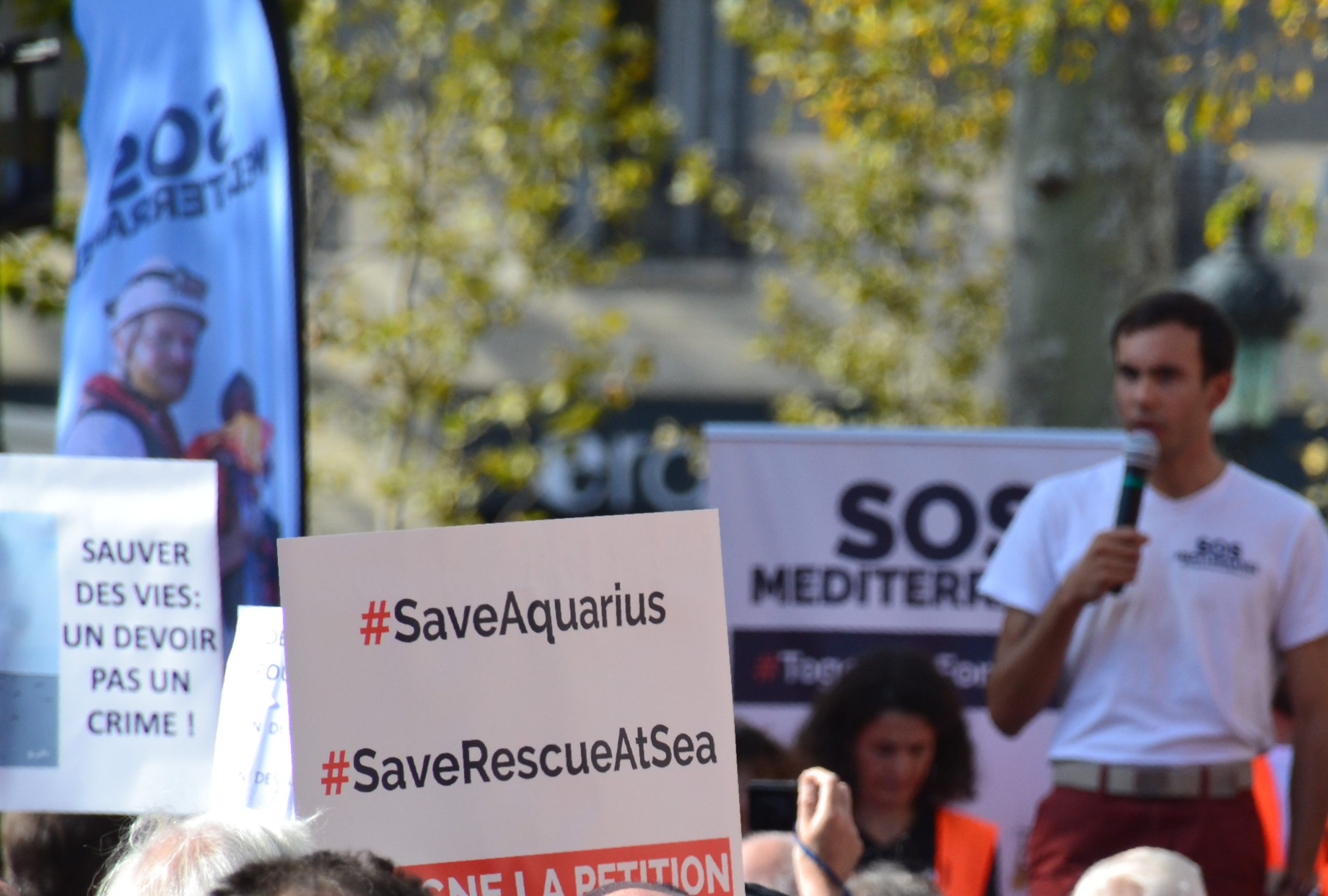
SOS Mediterranee is an international civil organization dedicated to saving lives at sea, focusing on the Central Mediterranean. The group has become a leading part of a network of ships and planes monitoring crossings from Africa to Europe in the area.
In August, the group concluded the central Mediterranean was becoming “increasingly hostile” and that “the expansion of European cooperation with Libyan actors regarding migration deterrence” bolstered this effect.
They said that on at least seven occasions in June and July, boats “linked to Libyan actors” had approached rescue vessels “at high speed” or trailed them for hours, engaging in “chases” into international waters. Additionally, they cited a “significant increase in the presence of unidentified speed boats linked to different armed groups in Libya.”
Last year the group accused the Libyan coast guard of attacking its Ocean Viking rescue ship in international waters after 100 shots were fired at the vessel carrying personnel and rescued migrants.
Though the group has voiced safety concerns to the EU, they are yet to receive any feedback, though an investigation is ongoing.
Dangerous for Rescuers and Migrants
These routes are now becoming dangerous for migrants and rescuers alike; besides natural dangers and threats from armed groups or smugglers, rescuers face increasing hazards from destination countries’ angry citizens and their governments.
Such incidents leave charities like the Aegean Boat Report bankrupt, while others like SOS Mediterranee and RNLI must bolster their security to continue their work.
“Our priority remains to care for and protect our people and their families,” an RNLI spokesperson told the BBC.
“I’m defending the rule of law,” Olsen said, “and defending human rights. It doesn’t concern a small group of people coming into Greek islands. It concerns all of us. It’s something that we pass on to our children.”