
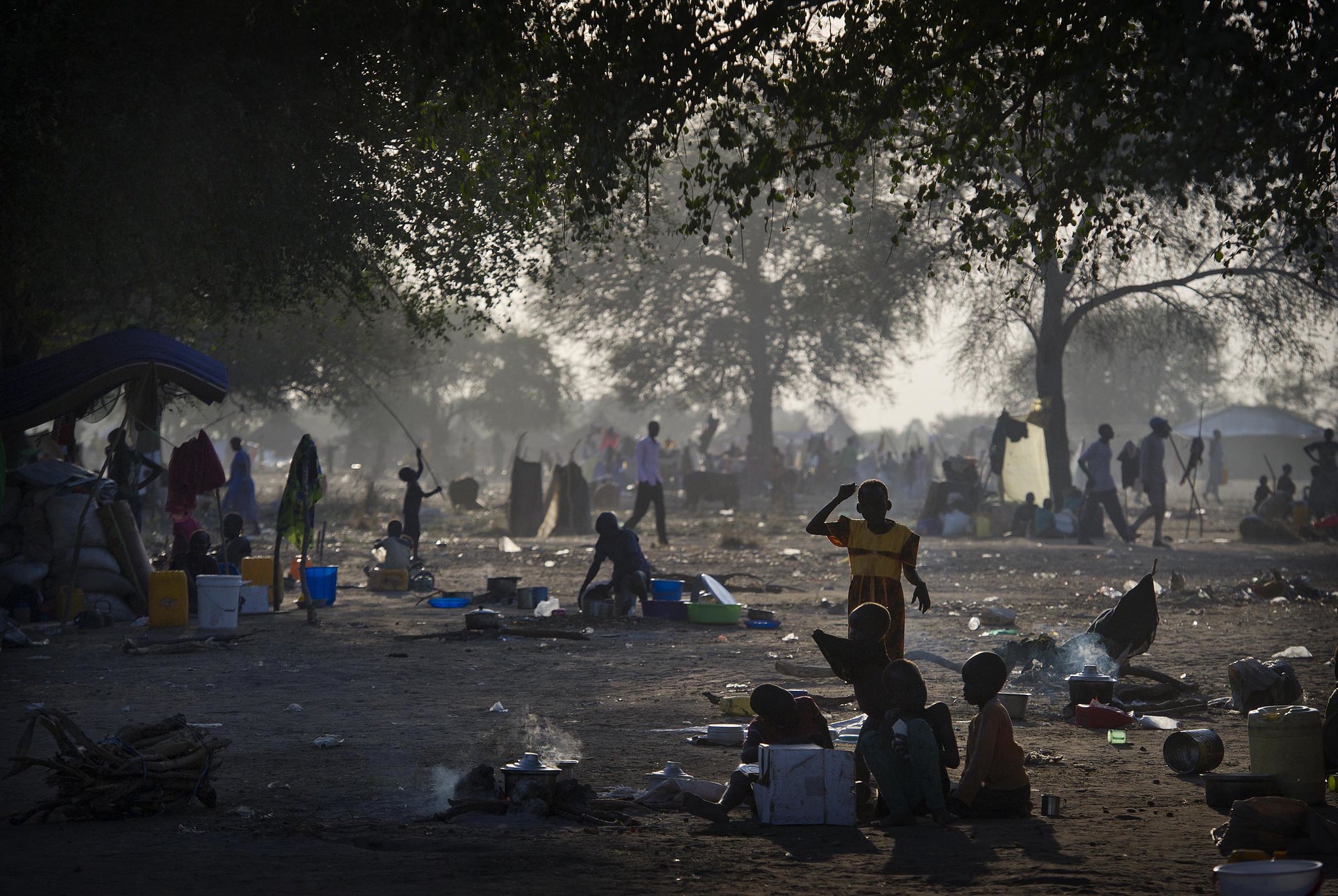
As war expands across the Middle East, European experts are wary of a repeat of the 2015 migration crisis. Meanwhile, the Sudan war rages on, with over 9 million people in internal displacement, 19 million suffering from acute or emergency hunger, and fewer than 18% of health facilities remaining functional.
Mohamed Refaat, chief of mission for the International Organization for Migration in Sudan, warns that the current largest humanitarian crisis in the world is only getting worse amid lack of funding; large numbers are expected to move into neighboring countries, then spilling into cross-regional countries – adding that it could become a situation similar to Syria in 2011.
Sudan’s Crisis Worsens but Its Aid Diminishes
Conflict between the Sudanese Armed Forces (SAF) and the Rapid Support Forces (RSF) continues into its third year, with the Darfur regions being the most affected. Both sides have been accused of committing crimes against humanity and war crimes, with the UN stating that some RSF actions may amount to genocide. Women and girls remain at heightened risk, as survivors report mass torture, rape, and executions.
According to the UN’s International Organisation for Migration (IOM), displacement peaked at almost 11.6 million in January of 2025. Currently, well over 9 million remain in displacement, with 3.8 million reportedly returning to their areas of origin.
Due to the conflict, the humanitarian crisis that erupted soon became the world’s most acute one. Since the beginning of the war in 2023, the UN World Food Programme (WFP) reached over 10 million of the most vulnerable – yet, 150,000 face catastrophic hunger, with the WFP reporting 24.6 million suffering from acute hunger, and 2 million remain at risk of famine.
To continue its operations, the WFP requires $700 million or risks total collapse. “Hard-earned gains now risk being reversed,” said Ross Smith, WFP Director of Emergency Preparedness and Response, in January. “WFP has been forced to reduce rations to the absolute minimum for survival. By the end of March, we will have depleted our food stocks in Sudan. Without immediate additional funding, millions of people will be left without vital food assistance within weeks.”
Health facilities are also devastated: the WHO documented over 200 attacks on health facilities and personnel, and IOM reports less than 18% of facilities remain functional. Without proper care, cholera has spread rapidly, killing over 3 500 people.
UNICEF Sudan Representative Sheldon Yett told Politico that Sudan, despite the numbers and the devastation, remains an “invisible” conflict. “I think that’s because there’s no easy narrative — it’s Africa, there’s always been conflict there. We should not accept that.”
Is Europe Ready for Another Wave?
Four years into the Syrian Civil War, over a million arrived in Europe. Most countries were welcoming, but the issue remained a polarizing one. The rapid arrival of so many overtaxed the asylum systems of European states, bringing the issue of asylum, migration, and border control to the forefront of politics.
German Chancellor Angela Merkel’s “Wir schaffen das” spread a message of tolerance among the states as well as to those who were looking for a destination. Now, that message is divisive, with the EU creating a New Pact on Migration and Asylum that includes collective border control measures, a Common European Asylum System (CEAS), and setting up deportation centers outside the EU.
The rise of the far-right was based on calling for harsher migration policy, swift returns, and better controls than in 2015. Countries may be able to handle the situation better now, but the shift could also mean a smaller number of refugees being granted asylum.
Rafaat added that Sudanese people want to return home and will do so if they perceive a “blink of hope of stability.” But “if this blink is destroyed at this moment, if it is not being invested in, we might absolutely see the opposite.”
What Next?
What comes is up to destination countries. Most invest in deportation hubs and migration control, but humanitarian organizations plead for funding to stop migration by handling the source.
Whatever route countries choose to take, the Sudanese people need help. Europe is aware of the similarities on some level: European Commission President Ursula von der Leyen recalled the 2015 migration crisis in connection with the escalation in the Middle East: “So far, we have not seen migratory flows towards Europe. But we must be prepared. We will not let there be a repeat of 2015.”
Ultimately, the enduring humanitarian crisis in Sudan demands that any long-term solution must balance security with the moral obligation to protect vulnerable lives.
