
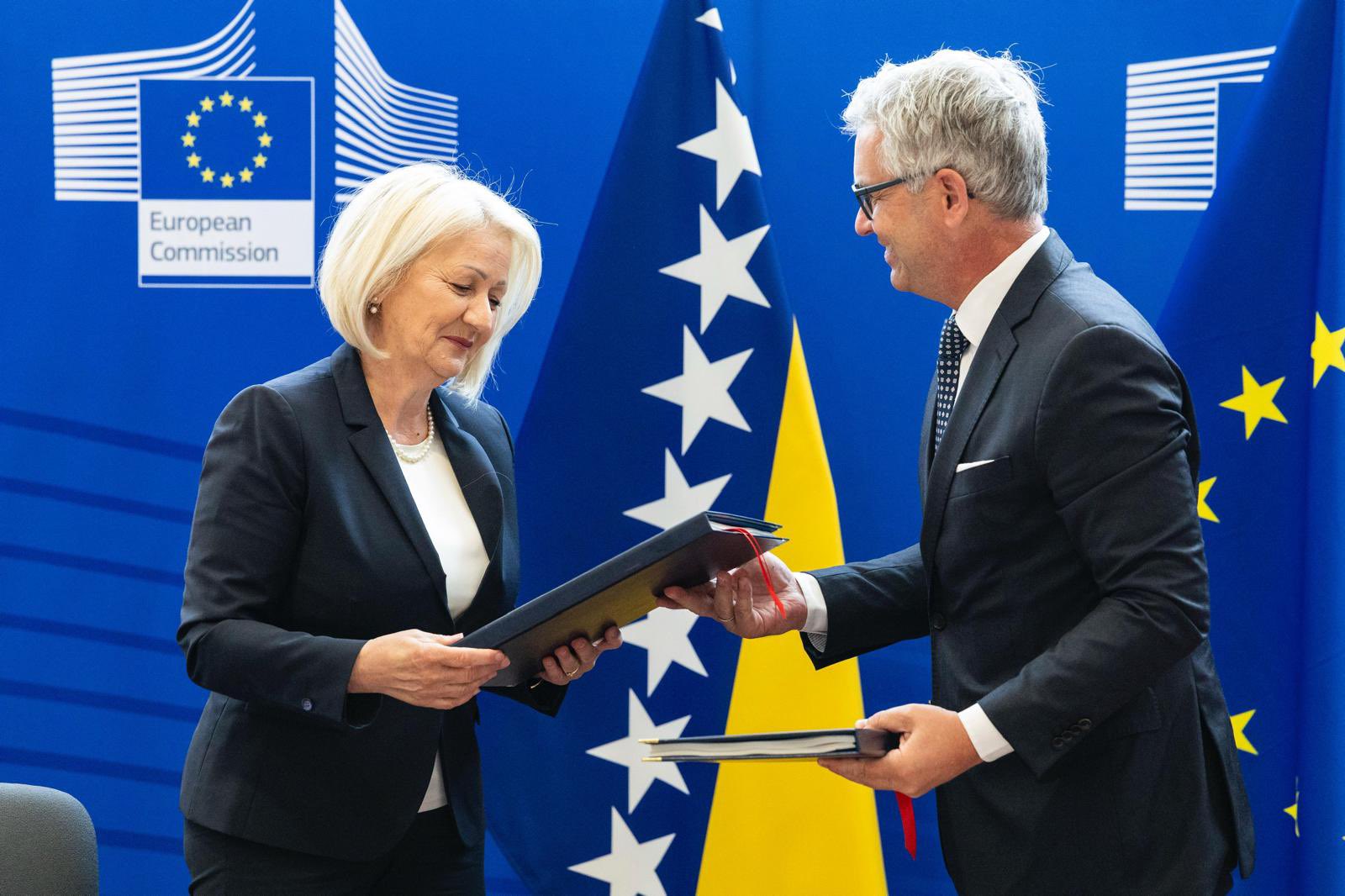
On 11 June 2025, the European Union and Bosnia and Herzegovina signed a new “status agreement” under which the European Border and Coast Guard Agency (Frontex) will gain expanded co operation rights with Bosnia’s border authorities. The accord empowers Frontex to assist in joint operations “along Bosnia and Herzegovina’s borders, including border crossing points including airports.”
The agreement was signed between Commissioner for Internal Affairs and Migration Magnus Brunner and the Chairwoman of Bosnia’s Council of Ministers Borjana Kristo.
Under the terms of the deal, Frontex’s Standing Corps officers will be deployable anywhere along Bosnia’s borders and at its airports, including zones bordering non EU countries.
Crucially, Frontex may exercise executive powers such as performing border checks and registering persons, pursuant to the expanded 2019 EU regulation. These operational deployments will occur under coordinated plans jointly negotiated with the Border Police of Bosnia and Herzegovina and require a formal request from Bosnian authorities.
Bolstering the EU’s external Frontiers at the Balkans
The agreement is anticipated to fortify regional security and contribute to the broader EU Action Plan on the Western Balkans, which has already resulted in a significant decrease in irregular crossings—from over 145,600 in 2022 to approximately 21,520 in 2024—and a further decrease of 58% in the first four months of 2025. The status agreement is provisionally effective immediately, subject to the European Parliament and Council’s ratification and Bosnia’s national consent. Upon its complete implementation, it will serve as a tangible advancement in Bosnia’s integration into the European Union and a significant advancement in its collaboration with EU security frameworks.
Frontex is already engaged in a comparable capacity in other non-EU nations. Moldova, Serbia, Montenegro, and Albania all have cooperation agreements with the EU agency to oversee irregular border crossings within the bloc.
The European Commission has reported that these deployments have led to a decrease in the number of irregular entries into the EU from 145,600 in 2022 to 21,250 by 2024. Additionally, there has been a 58 percentage point decrease in the first four months of this year.
Human rights activists and humanitarians have observed a rise in the number of individuals attempting to cross the Drina river, which also functions as the border between Serbia and Bosnia and Herzegovina, despite the reported decrease in the number of people traveling along the Balkan route. The European Union has implemented a variety of measures along its external border and elsewhere to significantly reduce the number of migrant arrivals in the region during the summer months each year. However, a decade ago, hundreds of thousands of individuals utilized this route to reach central Europe during the peak of the so-called refugee crises.
Mistreatments committed by Frontex throughout the Balkans
There are significant apprehensions regarding Frontex’s capacity and resolve to uphold fundamental human rights while fulfilling its border-control responsibilities. Serious concerns regarding accountability, oversight, and the agency’s dedication to international law and EU values arise when agency personnel witness abuse and fail to report it or are compelled to remain mute.
For instance, the Balkan Investigative Reporting Network (BIRN) has received numerous allegations and documents as well of abuses over the year of 2024. These documents, which were acquired through requests for access to public records, detail alleged abuses committed by Bulgarian officers who were involved in Frontex operations.
The following are examples of abuse: verbal abuse, stealing personal belongings, beatings with sticks, and severe injuries caused by service canines that were released. Additionally, individuals are forced to strip naked.
Frontex officers were discovered to be “failing to report migrant abuses” along the Albania–Greece frontier in a separate investigation conducted by Balkan Insight and the University of East Anglia. The investigation underscores the persistent failure to document rights violations against refugees.
The Border Violence Monitoring Network’s Black Book of Pushbacks recorded over 12,650 testimonies of migrants subjected to violence—beatings, forced returns, and other abuses back in 2020. These findings provide essential background to Frontex’s operational failures and complicity in the region.
Bosnia: A “Dead End” for Migrants
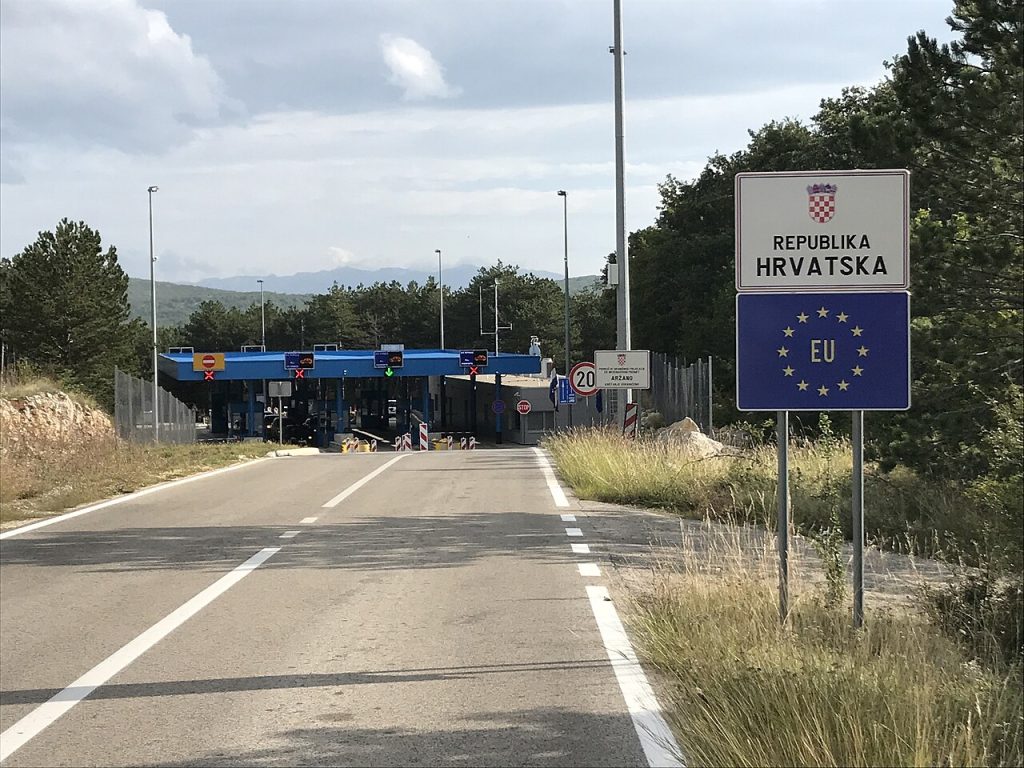
In 2024, a group of migrants sustained injuries in an accident that occurred when their van attempted to evade a police patrol in Croatia, near the Bosnian frontier. Half of the passengers in that vehicle were under the age of 18. Numerous additional incidents of injuries and fatalities have either been neglected or abandoned in the region.
Additionally, there are consistent reports of smuggling gangs in the area that are holding migrants captive for the purpose of extortion and ransom. It is probable that these perpetrators are members of the Afghan smuggling organization BWK.
BWK achieved prominence in 2023 and has maintained control over numerous migrant smuggling routes in Bosnia’s border regions for more than a year. The smugglers have reportedly adopted a more violent approach, incorporating larceny, kidnapping, and extortion into their operations. They are particularly interested in exploiting the victims of border police pushbacks.
